Step into a time machine and travel back to the 1950s, where living rooms were the epitome of style and comfort. Picture vibrant colors, sleek lines, and furniture that looked like it belonged in a space-age movie. This was the golden age of the living room, where families gathered to watch their favorite shows and sip on soda while discussing the latest trends.
Overview of 1950s Living Rooms
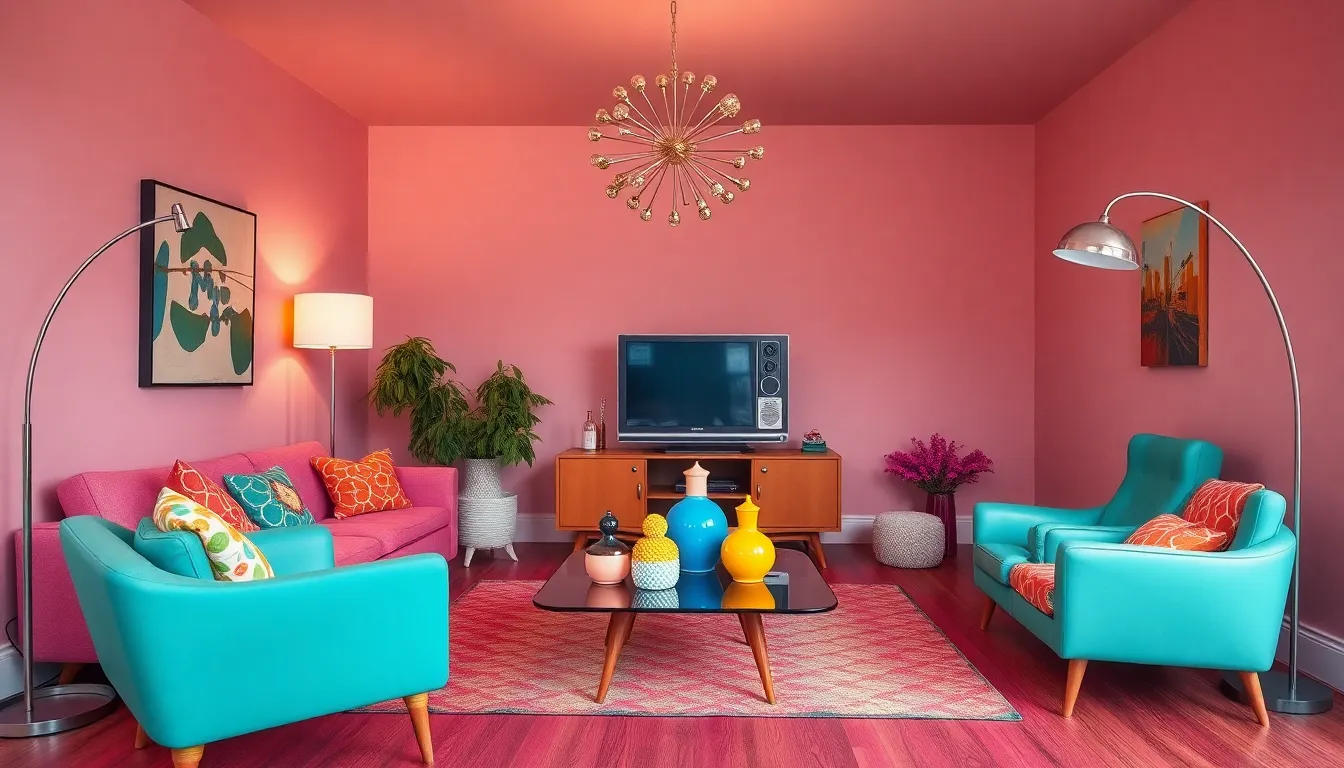
Living rooms in the 1950s reflect a unique blend of style and functionality. Bright colors marked the décor, with shades like turquoise, pink, and yellow dominating the palettes. Furniture designs featured clean lines, often highlighted by the use of new materials like plastic and metal.
Sofas and chairs often sported geometric patterns, presenting a modern aesthetic that appealed to the era’s sensibilities. Coffee tables, typically low and angular, served as focal points for conversation and relaxation.
Television emerged as a centerpiece in many living rooms, altering the way families interacted. When watching shows became a common pastime, furniture arrangements adjusted to accommodate this shift, emphasizing connectivity and comfort.
Accessories played a crucial role too. Often, they included decorative items like ceramic figurines and vibrant vases, which reflected mid-century modern design principles. Artwork, particularly abstract and avant-garde pieces, adorned the walls, enhancing the overall visual appeal.
Light fixtures also deserve attention. Sputnik chandeliers and arc floor lamps dotted the spaces, adding a sense of sophistication and glamour.
Textiles featured prominently as well; rugs, curtains, and cushions offered warmth and comfort. Available in various patterns, these fabrics complemented the overall design, creating inviting atmospheres.
Social interactions flourished in these vibrant spaces. Living rooms became gathering spots for friends and family, where discussions about contemporary events often flowed freely.
Key Design Elements
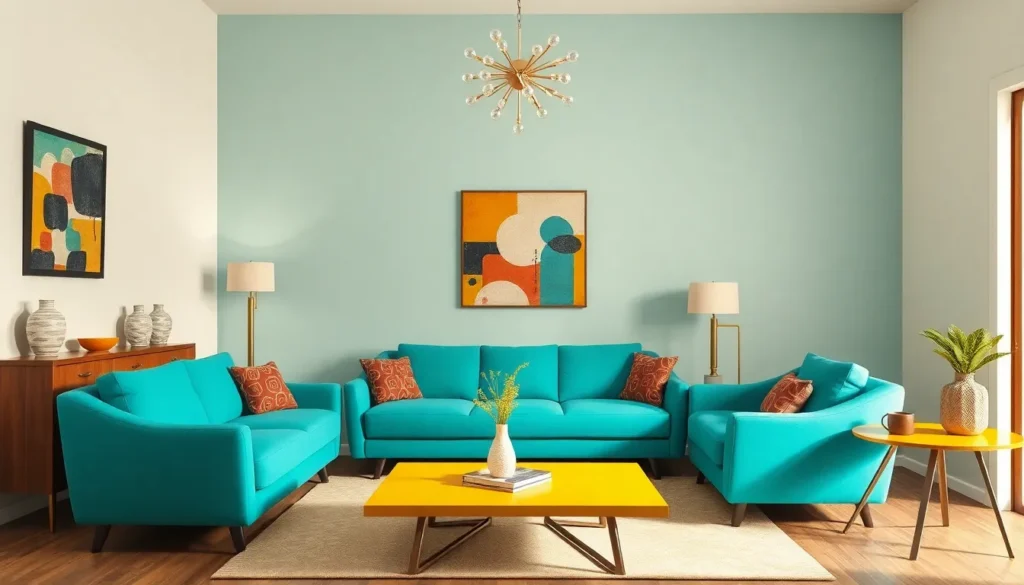
Key design elements of 1950s living rooms showcase a unique blend of style and functionality. This era emphasizes vibrant colors, sleek furniture designs, and visually striking accessories.
Furniture Styles
Furniture styles in the 1950s include clean lines and minimalist shapes. Sofas often feature geometric patterns, embodying a modern aesthetic. Chairs made from new materials like plastic and metal complement these designs. Coffee tables serve as focal points, enhancing both functionality and aesthetics. Mid-century modern designs dominate the landscape, providing both comfort and sophistication.
Color Palettes
Color palettes during this period highlight bright, bold hues. Turquoise, pink, and yellow dominate, creating lively atmospheres. These colors often appear in accents like throw pillows and wall art. Coordinated with neutral backgrounds, these vibrant tones enhance visual appeal. Such schemes reflect the optimism of the decade, inviting warmth and energy into living spaces.
Decorative Accessories
Decorative accessories play a vital role in 1950s living rooms. Common items include ceramic figurines, which add personality and charm. Vibrant vases complement the furniture while showcasing flowers. Abstract artwork often adorns walls, introducing unique focal points. Light fixtures like Sputnik chandeliers and arc floor lamps lend elegance, elevating the overall design. Textiles such as rugs and curtains add warmth and texture, contributing to inviting environments.
Popular Trends
The 1950s showcased vibrant living room trends that defined domestic aesthetics. They emphasized style, comfort, and functionality while embracing new design philosophies.
Mid-Century Modern Influence
Mid-century modern design dominated the 1950s living room scene. This style featured iconic furniture pieces with clean, minimalist lines that captured the essence of modernism. Designers like Charles and Ray Eames produced timeless chairs that combined comfort and form. Additionally, materials such as molded plywood and metal enhanced both durability and visual interest. You often found furniture pieces arranged to encourage social interaction. Overall, the emphasis on simplicity and integration with nature influenced the room’s overall vibe.
Retro Fabrics and Patterns
Retro fabrics and bold patterns invigorated living room decor during the 1950s. Textiles often showcased geometric shapes and vibrant colors that mirrored the artistic movements of the time. Designers used materials like nylon and polyester, which offered durability and easy maintenance. Couch cushions and curtains frequently featured bright hues like avocado green and mustard yellow, creating inviting atmospheres. Accessories like throw pillows incorporated whimsical designs that added flair. Collectively, these elements reflected a lively optimism and added charm to the era’s interiors.
Layout and Functionality
1950s living rooms emphasized a blend of style and practicality. These spaces catered to social interactions while highlighting contemporary design trends.
Room Arrangements
Furniture arrangements promoted comfort and connectivity. Sofas and chairs gathered in conversational clusters, encouraging family interactions. Coffee tables occupied central positions to facilitate dialogue. Television placement often dictated room layouts, ensuring optimal viewing angles. Open spaces prevailed, allowing easy movement within the room. The focus remained on creating inviting environments where families could unwind together.
Incorporating Technology
Technology played a crucial role in 1950s living rooms. Televisions became focal points, influencing furniture designs and arrangements. Home entertainment systems introduced a new dynamic to social gatherings. Cable and antennas expanded viewing options, making televisions essential. Innovative appliances complemented decor, enhancing functionality without sacrificing style. Accessories like stereo speakers integrated seamlessly into the aesthetic, highlighting the era’s commitment to modern living.
Nostalgic Influence on Modern Design
Designers today draw inspiration from the living rooms of the 1950s. Vibrant colors and clean lines remain highly influential in contemporary decor. Iconic pieces like Eames chairs often find their way into modern spaces, showcasing a blend of past and present aesthetics.
Mid-century modern elements resonate in current design trends. Geometric patterns and bold hues translated from the 1950s continue to enhance visual appeal. Contemporary decor frequently integrates these themes, creating lively yet balanced environments.
Functionality informs many modern living rooms, echoing the 1950s emphasis on social interactions. Open layouts promote connectivity, allowing families and friends to engage naturally. Designers often arrange seating to foster conversations, similar to the layouts of mid-century spaces.
Textiles also reflect this nostalgic influence. Today’s interiors incorporate vibrant rugs and whimsical throw pillows, reminiscent of the past. Fabrics made from durable materials evoke a sense of comfort while maintaining modern standards.
Lighting plays a significant role in reshaping living spaces, with fixtures inspired by the era’s iconic designs. Sputnik chandeliers and arc floor lamps serve as statement pieces, bridging the gap between nostalgia and modern elegance. Accessories remain crucial in adding personality, much like the ceramic figurines of earlier decades.
Incorporating these elements creates inviting atmospheres in contemporary homes. The warmth of a 1950s living room shines through in today’s designs, reminding individuals of a simpler, yet elegant time. This blend of nostalgia and innovation shapes a unique approach to modern living.
The essence of 1950s living rooms lies in their vibrant colors and functional designs that fostered connection and comfort. This era’s unique blend of style and practicality continues to inspire modern decor, showcasing how timeless elements can enhance contemporary spaces. By incorporating iconic furniture pieces and bold patterns, today’s designers pay homage to the charm of the past while creating inviting environments. The influence of mid-century modern aesthetics remains strong, proving that the warmth and energy of 1950s living rooms can still resonate in homes today.