Imagine waking up to the sweet sound of your coffee brewing and your blinds gently lifting to let in the morning sun—all without lifting a finger. Welcome to the world of automated home ideas, where convenience meets creativity. With a sprinkle of tech magic, transforming a mundane house into a smart home is easier than ever.
From voice-activated assistants that can turn on your favorite tunes to smart thermostats that know when you’re feeling chilly, the possibilities are endless. Automation doesn’t just simplify life; it adds a touch of fun and flair. Who wouldn’t want to impress friends with a home that practically runs itself? Dive into this article to discover how to turn your living space into a futuristic haven, making everyday tasks feel like a scene from a sci-fi movie.
Overview of Automated Home Ideas
Automated home ideas focus on enhancing convenience through various technological solutions. Voice-activated systems serve as essential components, enabling homeowners to control devices effortlessly. Smart thermostats aid in regulating temperature based on user preferences, ensuring energy efficiency while optimizing comfort.
Innovative lighting solutions, like smart bulbs, allow users to adjust brightness and color with simple commands, transforming a living space’s ambiance. Home security systems with automation features enhance safety through remote monitoring and alerts. These systems empower residents to manage locks, cameras, and alarms from their smartphones.
Integration of smart appliances streamlines daily chores. Refrigerators equipped with internet access can monitor grocery supplies and suggest recipes based on available ingredients. Smart ovens offer remote controls, enabling users to preheat or adjust settings while away from home.
Creating a futuristic living space involves utilizing automation in simple ways. Automated blinds adjust according to sunlight levels, enhancing energy conservation and comfort. Furthermore, smart entertainment systems facilitate seamless control over audio and video devices, allowing for personalized experiences.
Overall, the convenience of automated home ideas brings numerous benefits. By incorporating these technologies, homeowners not only simplify daily tasks but also impress guests with innovative living solutions. Organizations like the Consumer Technology Association report increasing trends in smart home adoption, reflecting a growing interest in such advancements.
Benefits of Automation
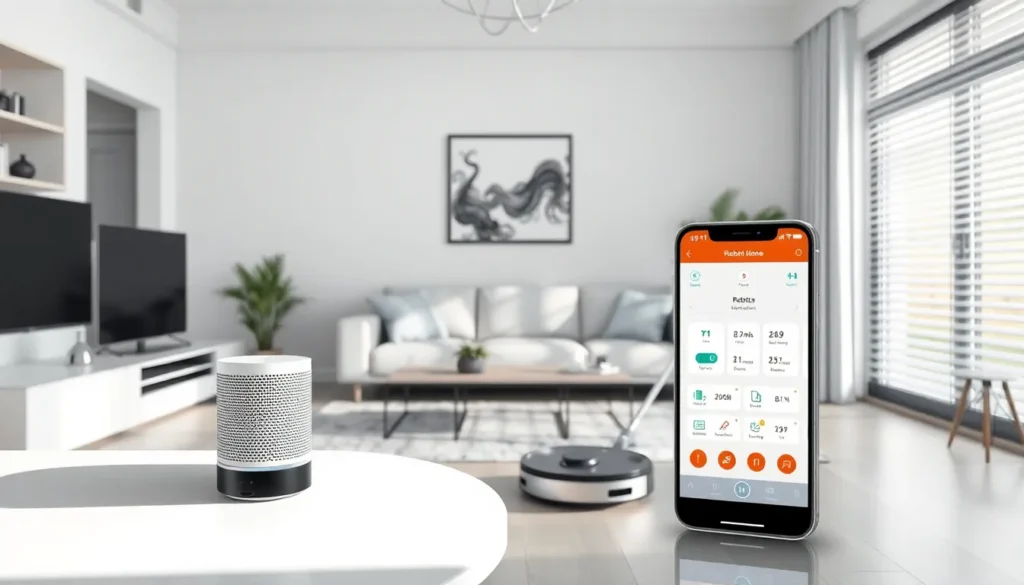
Automated home solutions provide numerous advantages that enhance daily living and overall home management.
Convenience and Efficiency
Convenience leads the list of benefits accessible through home automation. Homeowners enjoy smart technology that streamlines tasks. Features like smart speakers perform multiple functions like playing music or setting reminders. Additionally, connected devices provide remote access, enabling users to monitor security cameras or control lighting from anywhere using a smartphone. Efficiency increases as systems adjust automatically based on preferences or schedules. Smart thermostats learn routines to optimize heating and cooling. Automated cleaning devices, such as robotic vacuums, save time by handling floor maintenance. Overall, automation transforms routine chores into effortless experiences.
Energy Savings
Energy savings offer another significant advantage of automated homes. Smart systems enable real-time monitoring of energy consumption. Homeowners can easily track usage with apps that provide insights into habits. Devices such as smart plugs and energy-efficient appliances reduce energy waste through scheduling features. For example, programmable thermostats adjust temperatures according to presence, leading to considerable savings on utility bills. Automated blinds optimize natural light, minimizing the need for artificial lighting during the day. By prioritizing energy efficiency, households contribute to environmental sustainability and achieve cost savings over time.
Popular Automated Home Ideas
Automated home ideas enhance convenience and transform daily living. Various technologies offer innovative solutions for an improved lifestyle.
Smart Lighting Solutions
Smart lighting solutions provide flexibility in managing home illumination. Users can control brightness and color through voice commands or mobile apps. Incorporating sensors allows lights to adjust automatically based on occupancy or natural light levels. Devices like smart bulbs not only create tailored ambiance but also help reduce energy consumption. Many homeowners report significant savings in energy bills after switching to LED smart bulbs. This adaptive approach contributes to both comfort and efficiency.
Home Security Systems
Home security systems offer peace of mind through automation. These systems enable remote monitoring of properties, allowing users to check camera feeds and control locks from smartphones. Alerts notify homeowners about unusual activity, enhancing safety. Integration with smart lighting can also serve as a deterrent, simulating presence when away. Reports indicate a growing adoption of automated security features, with many people emphasizing their effectiveness in protecting homes. Smart locks, cameras, and alarms collectively ensure a secure living environment.
Climate Control Technologies
Climate control technologies allow for tailored indoor comfort. Smart thermostats learn user preferences and adjust temperature settings accordingly, optimizing heating and cooling efficiency. These devices contribute to energy savings by reducing unnecessary usage. Homeowners can program schedules and control climate settings remotely through applications. Many find that utilizing automated blinds further enhances energy conservation by maximizing natural light. The combination of these technologies results in a more comfortable and sustainable home atmosphere, appealing to environmentally conscious individuals.
Choosing the Right Automation Tools
Selecting appropriate automation tools enhances the smart home experience. Homeowners must consider various factors to make informed choices.
Budget Considerations
Budget plays a crucial role in automation tool selection. Costs vary significantly among devices, so establishing a budget helps narrow down options. Prioritizing essential features maximizes value within set limits. Researching and comparing brands provides insight into warranty and support options. Many automation tools also offer different price points, allowing flexibility in selecting devices that meet specific financial constraints. Identifying budget-friendly solutions can facilitate upgrades over time while ensuring that essential needs are addressed first.
Integration with Existing Systems
Integrating new devices with existing systems increases efficiency. Compatibility with current technologies simplifies management and enhances functionality. For instance, smart home hubs can connect various devices for centralized control. Homeowners should research device compatibility with leading systems like Amazon Alexa or Google Assistant. Seamless integration reduces the learning curve and improves user experience. Additionally, choosing devices that communicate with one another strengthens overall automation effectiveness, creating a cohesive smart home environment.
Future Trends in Home Automation
Smart home technology continues to evolve, presenting innovative trends shaping the future of home automation. Voice recognition systems gain sophistication, enabling more accurate commands and personalized interactions. Advanced artificial intelligence enhances automation, allowing devices to learn from user behavior and adapt accordingly.
Integration of the Internet of Things connects various appliances, creating a seamless and cohesive home environment. Wearable technology also plays a crucial role, allowing homeowners to control devices directly from smartwatches and health trackers. Increased emphasis on energy efficiency drives the adoption of smart technologies, with many products featuring eco-friendly designs.
Smart home security systems are becoming more intuitive, utilizing facial recognition for personalized alerts. Homeowners will likely see a rise in subscription-based services offering security monitoring through automated devices. Enhanced privacy measures also remain a priority, ensuring user data is protected while maintaining convenience.
Future technologies promise greater interoperability among devices, allowing multi-brand systems to work together effortlessly. The standardization of smart home systems will simplify installation and reduce the learning curve. Predictive analytics further boosts smart technology, anticipating needs and adjusting settings before users make requests.
In addition, energy management technologies forecast energy consumption, encouraging homeowners to make informed decisions about energy use. Solar energy integration offers exciting possibilities as homeowners increasingly turn to sustainable practices. Increased advancements in battery storage for solar energy boost reliance on renewable resources.
Overall, trends demonstrate a shift toward a more connected, intuitive, and efficient home. Emphasis on user experience drives development, ensuring that future automation systems cater to individual lifestyles while enhancing comfort and security.
Embracing automated home ideas can significantly enhance daily living. With smart technology at their fingertips, homeowners can experience unparalleled convenience and efficiency. The integration of various automated systems not only simplifies routine tasks but also promotes energy savings and improved security.
As technology continues to evolve, so do the possibilities for creating a truly smart home. By prioritizing essential features and ensuring compatibility among devices, individuals can craft a seamless living environment that meets their unique needs. The future of home automation looks promising, offering innovative solutions that elevate comfort and sustainability.