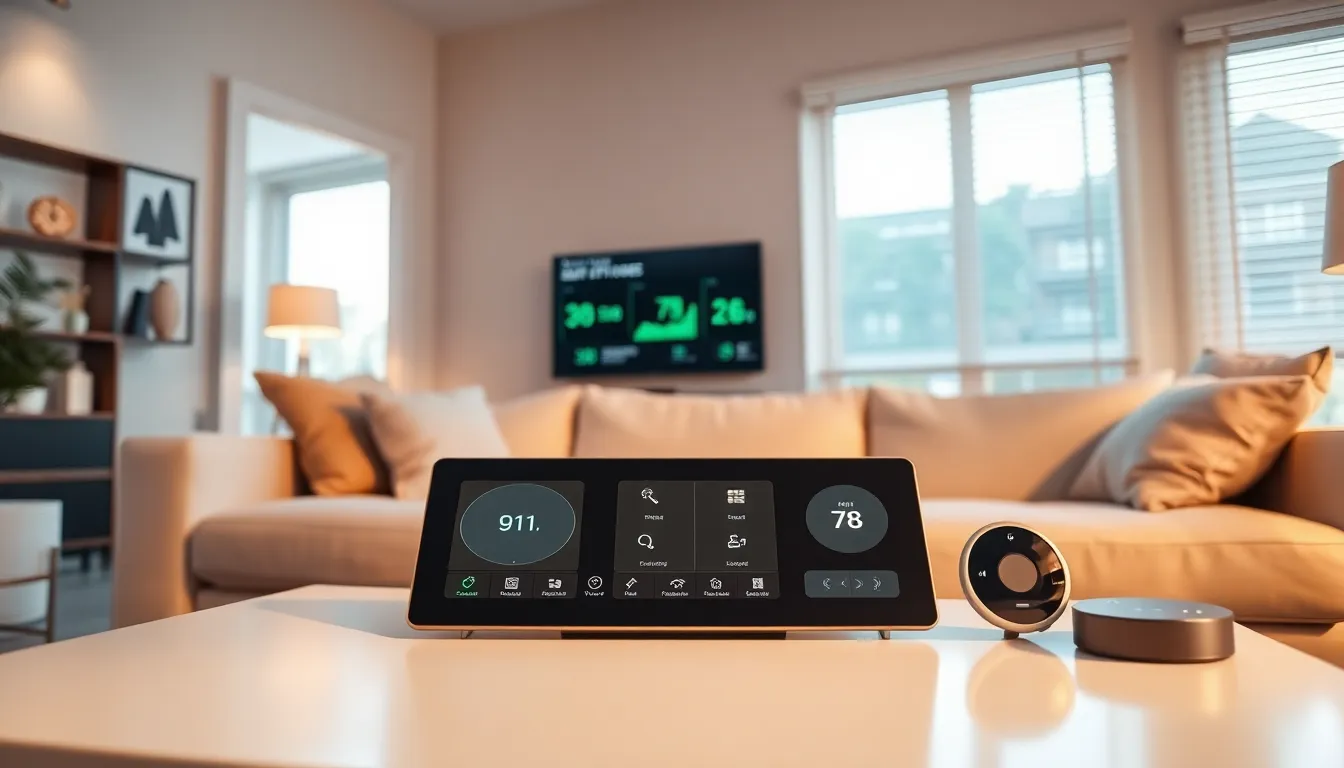
Imagine walking into your home and having it already know your preferences. The lights dim, your favorite playlist starts playing, and the thermostat adjusts to the perfect temperature, all without lifting a finger. Sounds incredible, right? Welcome to the world of smart homes, where artificial intelligence is the star player in making life easier and more efficient. In this text, we jump into how AI is reshaping our living spaces, the benefits it brings, and what challenges lie ahead. Buckle up, because your home is about to get a major upgrade.
Understanding Smart Home Technology

Smart home technology refers to a variety of devices and systems that make a home more automated and efficient. This includes everything from smart speakers to security systems and smart appliances. Using Wi-Fi or other connectivity options, these devices can be controlled remotely through a smartphone app or voice command. Homeowners can integrate various systems to communicate with one another, resulting in a seamless experience. For example, lighting can be programmed to turn on or off when someone enters or leaves a room, enhancing convenience and security. As technology continues to evolve, the market for smart home devices expands, bringing forth more innovative solutions.
The Role of AI in Smart Homes
Artificial intelligence plays a crucial role in the functionality of smart home devices. It acts as the brain behind many applications, allowing these devices to learn user behavior and preferences over time. For instance, smart thermostats can analyze your daily patterns and adjust the temperature accordingly, leading to significant energy savings. Voice-activated assistants like Amazon Alexa or Google Assistant use AI to interpret commands, respond to queries, and control other smart devices, creating an interactive experience. The integration of AI not only improves ease of use but also enhances the overall efficiency of smart home systems.
Key Benefits of AI Integration
Integrating AI into smart homes presents numerous benefits:
- Enhanced Convenience: Homeowners can control everything from lighting to security systems with voice commands, making daily tasks simpler.
- Energy Efficiency: Smart devices equipped with AI can optimize energy usage, reducing utility bills.
- Increased Security: AI-powered security systems can analyze patterns and alert homeowners to any unusual activity. They can even distinguish between familiar faces and potential intruders.
- Customization: Smart devices learn user habits and preferences, providing tailored experiences. Imagine having your morning coffee ready when you wake up, thanks to the AI-enabled coffee maker.
- Remote Monitoring: Homeowners can monitor their properties in real-time through smartphones, receiving instant alerts when something is amiss.
Challenges and Considerations
Even though its advantages, the integration of AI in smart homes comes with challenges. Privacy concerns top the list: with devices constantly collecting data to enhance user experience, questions arise about how that data is stored and used. Cybersecurity is another significant concern, as vulnerabilities in smart home networks could be exploited by hackers, leading to unauthorized access.
Also, the initial costs associated with installing smart devices can be substantial, although many argue that long-term savings in energy and efficiency outweigh these costs. Finally, there’s the potential for technology fatigue. As devices become more complex, some users may feel overwhelmed by the ever-evolving landscape of technology. Striking a balance between advancement and user-friendly experiences is essential.
The Future of AI in Smart Homes
The future of AI in smart homes looks incredibly promising. With advances in machine learning and natural language processing, intelligent home devices will become even more intuitive. They will not only interact seamlessly with each other but also with their environment. Picture a home that adjusts not just to your preferences but also considers factors like the weather or the time of day.
Also, we can expect further integration with other emerging technologies, such as the Internet of Things (IoT) and smart cities. The dream of a fully connected home where everything communicates effortlessly is becoming more of a reality every day. As the technology matures, expect to see increased affordability and accessibility, making smart homes more attainable for the average consumer.