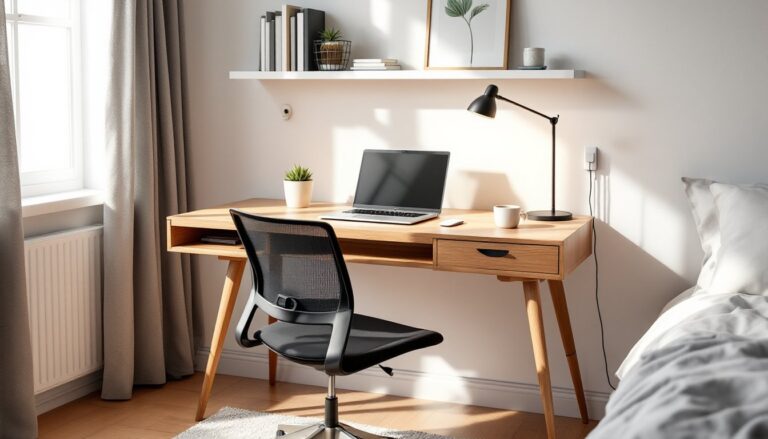
A leather office chair isn’t just a place to sit, it’s the anchor of a productive workspace. Whether you’re setting up a home office or upgrading from a hand-me-down task chair, leather brings a combination of durability, visual weight, and long-term comfort that few other materials can match. But not all leather chairs are created equal. The difference between a chair that supports years of focused work and one that cracks, sags, or causes lower back pain often comes down to material quality, frame construction, and ergonomic design. This guide walks through everything needed to choose, style, and maintain a leather office chair that works as hard as you do.
Table of Contents
ToggleKey Takeaways
- A leather office chair combines durability, breathability, and professional appearance, lasting 10 to 15 years with proper care when made from quality materials like top-grain or full-grain leather.
- When selecting a leather office chair, prioritize ergonomic features including adjustable lumbar support, tilt tension control, height-adjustable armrests, and high-density foam cushioning to prevent back pain and discomfort during extended work sessions.
- Full-grain and top-grain leather offer superior durability and aging benefits compared to corrected-grain, bonded, or synthetic alternatives, making them worthwhile investments despite higher upfront costs.
- Match your leather office chair to your workspace aesthetic—choose tufted executive styles for traditional offices, streamlined task chairs for modern spaces, and distressed leather for industrial-loft settings.
- Maintain your leather office chair weekly with a dry microfiber cloth, condition monthly with furniture-grade conditioner, protect it from direct sunlight and heat, and address spills immediately to preserve longevity and appearance.
Why Choose a Leather Chair for Your Home Office
Leather office chairs offer advantages that go beyond aesthetics. From a practical standpoint, genuine leather is naturally breathable, allowing air circulation that prevents the sticky, sweaty feeling common with vinyl or mesh alternatives. It also develops a patina over time, a soft sheen and suppleness that improves with age rather than degrading.
Durability is another major factor. A well-made leather chair can last 10 to 15 years with proper care, far outlasting fabric upholstery that pills, stains, or retains odors. Spills wipe clean with a damp cloth, and the material resists punctures better than woven textiles.
There’s also the visual impact. Leather conveys professionalism and permanence, which matters if your home office doubles as a meeting space for video calls or client consultations. A tufted executive chair or a streamlined mid-century design makes a statement without requiring additional decor.
Finally, resale value holds up. Quality leather office chairs retain a significant portion of their original price on secondary markets, especially if the frame is solid hardwood or steel and the leather is top-grain or full-grain.
Types of Leather Used in Office Chairs
Not all leather is the same, and understanding the distinctions helps avoid overpaying for low-grade material or underestimating maintenance requirements.
Full-grain leather is the highest quality. It includes the entire grain layer with natural markings, pores, and texture intact. It’s the most durable and develops the richest patina, but it’s also the most expensive. Expect to see this in executive chairs priced above $800.
Top-grain leather is the second tier. The surface is lightly sanded to remove imperfections, then finished with a protective coating. It’s smoother and more uniform than full-grain, easier to clean, and still highly durable. This is the sweet spot for most home office buyers balancing cost and longevity.
Corrected-grain leather (sometimes called “genuine leather” on lower-end chairs) has more extensive sanding and an embossed texture applied to mimic natural grain. It’s less breathable and won’t age as gracefully, but it’s budget-friendly and holds up reasonably well for light to moderate use.
Bonded leather is not true leather, it’s a composite of leather scraps and polyurethane. It looks decent out of the box but tends to peel and crack within two to three years, especially in high-contact areas like armrests and seat edges. Avoid this for any chair used daily.
PU leather (polyurethane) is fully synthetic. It’s vegan, affordable, and wipes clean easily, but it doesn’t breathe and can feel clammy in warm rooms. It’s a reasonable choice for occasional-use chairs or tight budgets, but don’t expect it to last more than five years.
Key Features to Look for When Buying a Leather Office Chair
Start with the frame. Steel or hardwood frames provide the structural integrity needed for daily use. Chairs with molded plastic bases or thin-gauge metal tend to wobble or crack under stress, especially if the user is over 200 pounds. Check the weight capacity rating, most quality chairs support 250 to 300 pounds, but heavy-duty models go up to 400.
Casters matter more than most people realize. Hard plastic wheels can scratch hardwood or tile. Rubber-coated or polyurethane casters protect floors and roll more smoothly on carpet. If the chair will live on hardwood, budget for a clear polycarbonate chair mat or confirm the casters are floor-safe.
Adjustability is non-negotiable. At minimum, look for seat height adjustment via a pneumatic cylinder, tilt tension control (adjusts how much resistance you feel when leaning back), and a tilt lock to keep the seat stationary when needed. Chairs without these features force your body to adapt to the chair rather than the other way around.
Armrests should be height-adjustable at a minimum. Better models also offer width and pivot adjustment, which helps align the armrests with your natural arm position and prevents shoulder strain. Fixed armrests often hit desk edges or force awkward postures.
Pay attention to seat depth. If the seat pan is too deep, the front edge will press into the back of your knees, cutting off circulation. If it’s too shallow, your thighs won’t be fully supported. Adjustable seat depth is a premium feature but worth it for users significantly shorter or taller than average.
Ergonomic Considerations
Lumbar support is critical for anyone spending more than two hours a day seated. The best chairs include adjustable lumbar support that moves up, down, and in or out to match the natural curve of your spine. Without it, you’ll unconsciously slouch forward, leading to chronic lower back pain.
Seat cushion density also affects long-term comfort. High-density foam (2.0 pounds per cubic foot or higher) maintains its shape over years of use. Low-density foam compresses quickly, creating a hammock effect that throws off your posture. Press hard on the seat, if your hand bottoms out easily, the foam is too soft.
Recline range varies widely. Task chairs typically recline 10 to 15 degrees, while executive chairs may go to 135 degrees or more. If you take calls or review documents while leaning back, a wider recline range with multi-position lock is valuable. Just make sure the mechanism is robust, cheap recline functions break within a year.
Finally, consider headrest placement. If the chair includes one, it should support the base of your skull without pushing your head forward. Many headrests are purely decorative and don’t adjust enough to be functional. Test before buying, or verify that it’s height- and angle-adjustable.
How to Match a Leather Office Chair to Your Home Office Decor
Leather office chairs come in a range of styles, and choosing the right one depends on the room’s overall aesthetic and function.
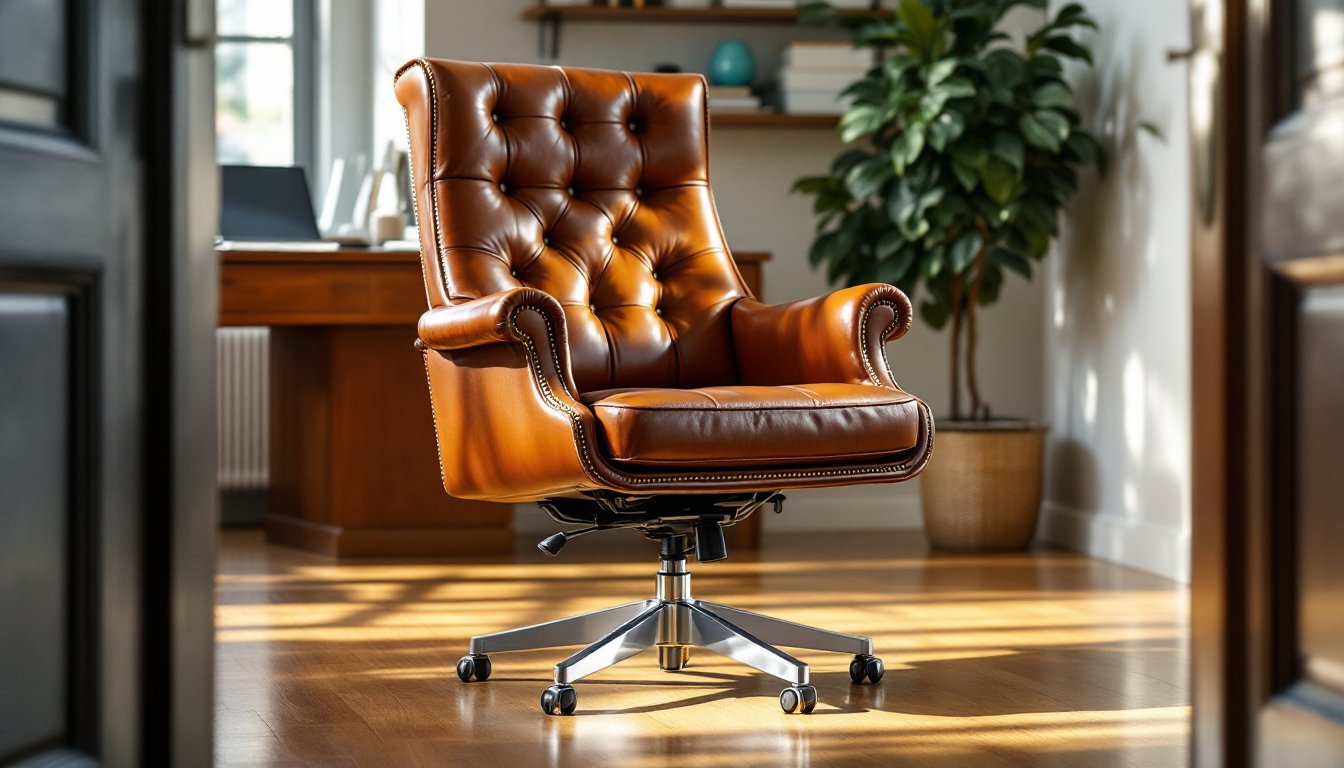
For a traditional or classic office, look for tufted executive chairs with nailhead trim, rolled arms, and rich brown or burgundy leather. These pair well with wood desks, built-in bookshelves, and warm lighting. They carry visual heft, so balance them with substantial furniture, not delicate glass or acrylic pieces.
Modern or minimalist spaces benefit from streamlined leather task chairs with clean lines, low backs, and neutral tones like black, white, or gray. Mid-century designs with molded plywood shells and leather cushions bridge vintage and contemporary styles. These work particularly well in home office setups that emphasize natural materials and open layouts.
For industrial or loft-style offices, distressed leather in tan, camel, or espresso adds texture without clashing with exposed brick, metal shelving, or concrete floors. Chairs with visible stitching, metal frames, or riveted details reinforce the aesthetic. Avoid overly polished finishes, they’ll feel out of place.
Transitional offices (blending traditional and modern elements) can handle almost any leather chair as long as the color palette is consistent. Stick to neutrals or repeat an accent color already present in rugs, curtains, or artwork.
Scale matters. A high-backed executive chair can overwhelm a small alcove office or a floating desk. Conversely, a compact task chair might look lost behind a 72-inch executive desk. Measure your desk height and workspace footprint before committing to a chair style.
Caring for and Maintaining Your Leather Office Chair
Leather requires minimal but consistent care. Neglect it, and you’ll see cracking, fading, and stiffness within a few years.
Weekly maintenance: Wipe down the chair with a dry microfiber cloth to remove dust and oils. Pay attention to armrests, the headrest, and seat edges where skin contact is highest. For stubborn grime, use a cloth lightly dampened with distilled water, never tap water, which can leave mineral deposits.
Monthly conditioning: Apply a leather conditioner every four to six weeks, depending on humidity levels. Conditioner replaces natural oils that evaporate over time, keeping the leather supple. Use a product formulated for furniture leather, not automotive or shoe leather. Apply a thin, even layer with a soft cloth, then buff off any excess. Over-conditioning can make leather sticky or attract dust.
Avoid direct sunlight and heat sources. UV rays fade and dry out leather, while radiators, space heaters, and forced-air vents cause cracking. Position the chair at least three feet from windows or use blackout shades. If sunlight is unavoidable, rotate the chair periodically so wear is even.
Address spills immediately. Blot liquids with a clean, dry cloth, don’t rub, which spreads the stain and drives it deeper. For oily stains, sprinkle cornstarch or baking soda on the spot, let it sit for a few hours to absorb the oil, then brush it off. For ink or dye transfer, consult a professional leather cleaner rather than experimenting with solvents.
Check hardware annually. Tighten screws on the armrests, seat pan, and backrest. Lubricate the pneumatic cylinder and tilt mechanism with silicone spray if movement becomes stiff. Replace worn casters before they damage flooring.
For deep cleaning or restoration of older chairs, consider a professional service. They can repair scratches, re-dye faded areas, and recondition severely dried leather more effectively than DIY methods.
Common Mistakes to Avoid When Choosing a Leather Office Chair
Prioritizing looks over ergonomics is the most frequent error. A gorgeous chair that doesn’t support your spine or allow proper adjustments will cause discomfort no matter how well it photographs. Function comes first.
Ignoring weight capacity leads to premature failure. If you’re near the chair’s rated limit, go up a tier. Frames, cylinders, and casters all have load thresholds, and exceeding them voids most warranties.
Assuming all “genuine leather” is quality leather. As noted earlier, “genuine” is often a marketing term for corrected-grain or bonded leather. Ask for the specific grade, top-grain or full-grain, and verify it in writing if buying online.
Skipping the return policy is risky. Even well-reviewed chairs don’t work for every body type. Buy from retailers offering at least a 30-day return window, and test the chair during typical work sessions, not just while browsing interior design inspiration or reading reviews.
Overlooking assembly requirements. Some chairs arrive fully assembled: others require significant effort. If you’re not comfortable with hand tools or following multi-step instructions, factor in assembly service costs or choose a model with minimal setup.
Buying based solely on price. A $200 bonded leather chair and a $600 top-grain chair are not interchangeable. The cheaper option will need replacement in two to three years, while the pricier model can last a decade. Calculate cost per year of use, not just upfront expense.
Not measuring the workspace. Chairs have footprints, width, depth, and clearance needed for recline. Measure your desk area, especially if the chair will tuck under the desk or fit into a corner workstation. Many home decor resources offer room planning tools that can help visualize fit before purchase.
Finally, neglecting the break-in period. New leather feels stiff and may have a slight odor. Give it two to four weeks of regular use before deciding it’s uncomfortable. The material will soften, and your body will adjust to the ergonomics. If discomfort persists beyond that, the chair likely isn’t the right fit.