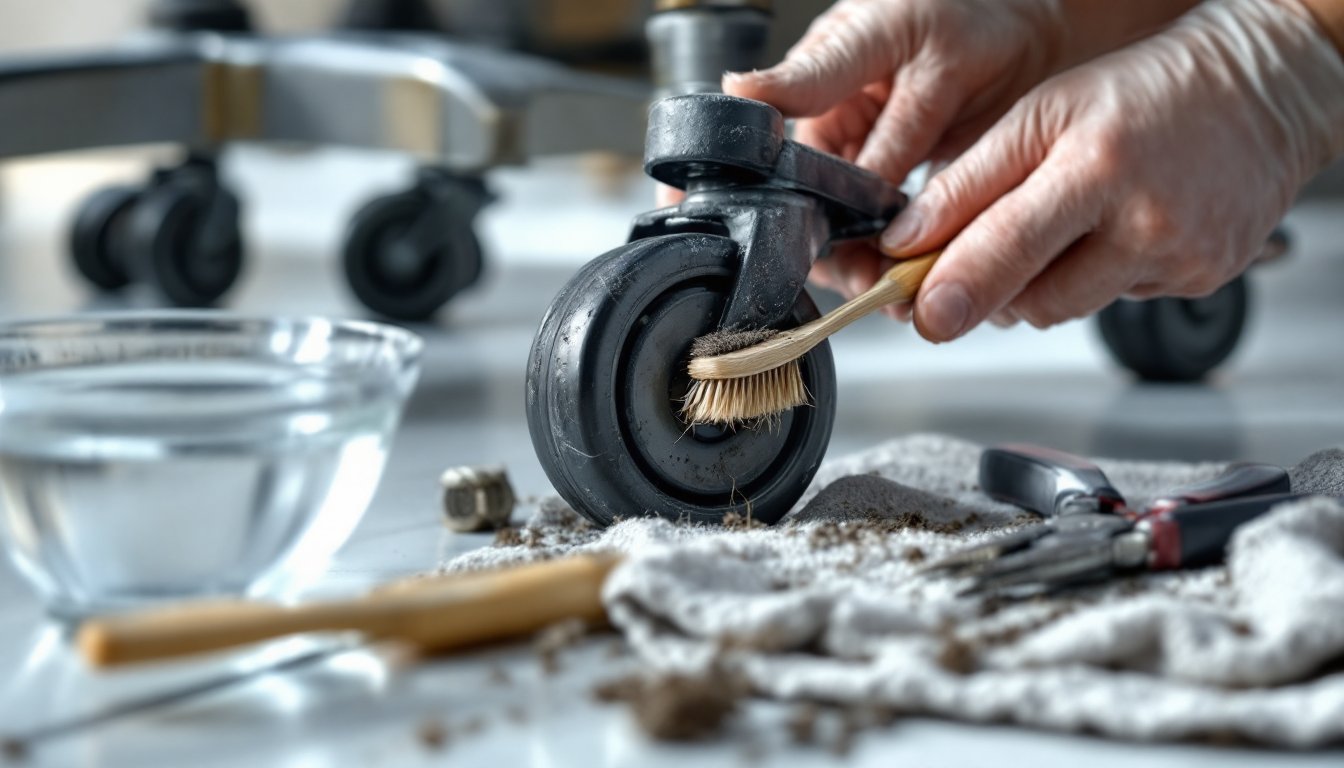
Stuck wheels on an office chair are more than just annoying, they force poor posture, strain muscles, and wear out carpet or flooring faster. The culprit is usually a thick coat of hair, dust, and grime wrapped around the wheel axles, sometimes built up over years of rolling across floors. The good news? Cleaning chair wheels is a straightforward task that takes about 20 minutes and requires no special tools. Most people can restore smooth, effortless rolling with supplies already sitting under the kitchen sink. This guide walks through the entire process, from safely removing casters to deep-cleaning every hidden crevice.
Table of Contents
ToggleKey Takeaways
- Cleaning office chair wheels takes about 20 minutes and requires only household supplies like dish soap, warm water, and a toothbrush to restore smooth rolling.
- Hair and debris wrapped around the wheel axle create the majority of rolling resistance, and removing this buildup prevents muscle strain and floor damage.
- Regular maintenance every 2–3 months—including vacuuming around the chair, wiping wheels with a damp cloth, and removing visible hair—prevents stuck wheels from becoming a deep-cleaning project.
- Most office chair wheels pop out with firm, steady pressure; for stuck wheels, gentle prying with a flathead screwdriver or rocking side to side usually works without damage.
- Submerging cleaned wheels for 5–10 minutes and thoroughly drying them before reinstallation ensures smooth operation and prevents moisture from trapping in the axle bearing.
Why Office Chair Wheels Get So Dirty (And Why It Matters)
Office chair casters sit directly on the floor, collecting everything in their path: pet hair, human hair, carpet fibers, dust bunnies, food crumbs, and even small bits of paper or packaging material. As the wheel spins, this debris doesn’t just brush off, it wraps around the axle and gets pressed into the narrow gap between the wheel and the wheel housing. Over time, this buildup creates friction that makes the chair harder to roll.
That resistance isn’t just inconvenient. When wheels don’t roll smoothly, users push harder or shift their weight awkwardly, leading to repetitive strain on shoulders, lower back, and legs. Stuck wheels also drag across flooring instead of rolling, which can scratch hardwood, grind dirt into carpet pile, and leave scuff marks on tile or vinyl.
Casters on hard flooring typically accumulate more visible grime, grease, sticky residue from spills, and fine particles, while carpet environments tend to trap hair and fibers. Either way, cleaning the wheels every few months prevents the problem from escalating to the point where the wheels need replacement. Standard office chair casters (usually twin-wheel or single-wheel hard plastic or polyurethane) are designed to last years, but only if they’re maintained.
Tools and Supplies You’ll Need
Gathering everything beforehand keeps the process efficient. Most of these items are household staples:
Materials:
- Warm water (1-2 gallons)
- Dish soap (a few drops: degreasing formulas like Dawn work well for sticky residue)
- White vinegar or rubbing alcohol (optional, for disinfecting or cutting through stubborn grease)
- Old toothbrush or stiff-bristle scrub brush
- Butter knife or flathead screwdriver (for prying off wheels)
- Tweezers or needle-nose pliers
- Microfiber cloths or old towels
- Paper towels
- Small bowl or bucket
Safety Gear:
- Rubber gloves (optional but recommended if handling greasy buildup or using alcohol)
No power tools or specialty cleaners are required. If the casters are extremely grimy or haven’t been cleaned in years, consider using a degreaser spray, but dish soap handles most jobs. For those who want a deep clean similar to detailed maintenance guides, a small basin for soaking speeds up the process.
Step-by-Step: How to Remove Office Chair Wheels
Most office chairs use a grip-ring or friction-fit stem that pops out with firm, even pressure. A few higher-end models use a threaded stem, but those are less common.
1. Flip the chair upside down or tip it on its side. Work on a clean, flat surface, an old towel or drop cloth protects both the chair and the floor.
2. Examine the wheel attachment. The caster stem (the metal or plastic pin connecting the wheel to the chair base) should be visible. Look for any clips, screws, or release mechanisms. Most have none.
3. Grip the wheel firmly and pull straight out. Apply steady force, don’t twist or jerk. If it resists, use a flathead screwdriver or butter knife to gently pry between the wheel housing and the chair base while pulling. The goal is to break the friction seal, not to damage the plastic.
4. Repeat for all five wheels. Keep them together in one spot so none roll away.
Tip: If a wheel absolutely won’t budge, try rocking it gently side to side while pulling. Years of weight and use can compress the grip ring, but persistent pulling usually works. If a stem breaks or a wheel cracks during removal, replacement casters are inexpensive (typically $10–$20 for a set of five) and widely available at office supply or hardware stores.
Deep Cleaning Your Chair Wheels
With the wheels removed, the real cleaning begins. This is where the buildup becomes obvious, most people are surprised by how much debris hides in those narrow axle gaps.
1. Remove loose debris by hand. Pick off large clumps of hair, dust, or fibers. Tweezers or needle-nose pliers work well for stubborn bits wrapped tightly around the axle.
2. Prepare a cleaning solution. Fill a small bowl or bucket with warm water and a few drops of dish soap. For wheels with sticky residue or odor, add a splash of white vinegar or rubbing alcohol.
3. Submerge the wheels. Let them soak for 5–10 minutes. This softens caked-on grime and makes scrubbing easier.
4. Scrub each wheel. Use an old toothbrush or stiff-bristle brush to scrub the wheel surface, the tread (the part that touches the floor), and especially the axle housing, the plastic or metal bracket that holds the wheel. Pay attention to the small gap where the wheel meets the housing: this is where most hair and debris hide.
5. Rinse thoroughly. Run each wheel under warm water to flush away soap and loosened dirt. Shake off excess water.
6. Dry completely. Use paper towels or a microfiber cloth to wipe down each wheel. Let them air-dry for 10–15 minutes before reinstalling, especially if water got into the axle bearing. Trapped moisture can attract dust or cause the axle to seize.
For persistent sticky spots, like adhesive from tape or mystery gunk, dab a little rubbing alcohol on a cloth and rub until it lifts. Many DIY cleaning methods recommend this approach for tough residues without damaging plastic or rubber components.
Removing Hair and Debris Wrapped Around Axles
This is the most tedious part but also the most important. Hair wrapped around the axle creates the majority of rolling resistance.
1. Locate the axle pin. It’s the small metal or plastic rod at the center of the wheel that allows it to spin. On twin-wheel casters, there are two wheels sharing one axle.
2. Use tweezers or needle-nose pliers to grab the end of any visible hair or string. Pull slowly and steadily. Often, one long strand is wound dozens of times around the axle.
3. For hair tucked deep inside the housing, use a butter knife or flathead screwdriver. Gently slide the edge into the gap and pry out the matted debris. Be careful not to scratch or crack the plastic.
4. Spin the wheel while pulling. This unwinds tangled hair more easily than pulling against the rotation.
5. Wipe the exposed axle with a damp cloth. Remove any remaining dust or grease. If the axle looks dry or corroded, a tiny drop of silicone lubricant or 3-in-1 oil can help it spin freely, but use sparingly. Excess oil attracts dirt.
If the wheels still feel gritty after cleaning, check the bearing (the small ring inside the wheel that rides on the axle). Cheap casters sometimes have unsealed bearings that collect grit. In that case, replacement is often more practical than repair.
Reattaching and Testing Your Clean Wheels
Reinstallation is straightforward, but doing it correctly ensures the wheels stay secure and roll smoothly.
1. Align the caster stem with the socket in the chair base. The stem should slide in straight, no angling.
2. Push firmly until the wheel clicks or seats fully. You should feel resistance, then a solid stop. Give the wheel a tug to confirm it’s locked in place.
3. Repeat for all five wheels. Double-check that each one is seated at the same depth: uneven wheels cause the chair to wobble.
4. Flip the chair upright and test. Sit in the chair and roll in multiple directions, forward, backward, and side to side. The movement should feel smooth and effortless compared to before cleaning.
5. Listen for noise. A slight hum is normal, especially on hard flooring, but squeaking or grinding means something’s still caught in the axle or the wheel isn’t fully seated. Remove and inspect again if needed.
If one wheel still drags or wobbles, it may be damaged. A cracked wheel or bent stem won’t improve with cleaning and should be replaced. Mixing new and old casters is fine as long as they’re the same diameter (most office chairs use 2-inch or 2.5-inch wheels).
Maintenance Tips to Keep Wheels Rolling Smoothly
Regular upkeep prevents the problem from returning and extends the life of both the casters and the flooring.
Vacuum around the chair weekly. This reduces the amount of hair and debris the wheels pick up in the first place. A quick pass with a handheld vacuum or broom makes a noticeable difference.
Flip the chair and inspect wheels every 2–3 months. A visual check takes 30 seconds and catches buildup before it becomes a deep-cleaning project. Pull out visible hair with your fingers or tweezers.
Wipe wheels with a damp cloth monthly. A quick wipe removes surface dust and prevents sticky residue from hardening. This is especially helpful in kitchens or home offices where spills are common.
Use a chair mat on carpet. Polycarbonate or PVC chair mats reduce friction, protect carpet pile, and keep wheels cleaner. On hard flooring, mats prevent scratches and reduce noise.
Consider upgrading to rollerblade-style casters. These have softer polyurethane wheels that roll more smoothly, handle debris better, and are gentler on floors. They’re a popular retrofit and fit most standard office chairs with grip-ring stems. Installation is identical to standard casters. Detailed step-by-step instructions for caster upgrades are widely available for those interested in a more permanent improvement.
Don’t oil the wheels unless necessary. Over-lubrication attracts dust and hair, making the problem worse. If a wheel squeaks after cleaning, one small drop of silicone spray on the axle is enough.
By following these simple habits, most people can keep office chair wheels rolling smoothly for years without needing frequent deep cleans or replacements.