If you’re under 5’4″ and working from home, you’ve probably noticed that most office chairs feel like they were built for someone a foot taller. Standard chairs leave short users with dangling feet, lumbar support that hits mid-back instead of the lower spine, and seat depths that turn the front edge into a knee-pit torture device. The problem isn’t your posture, it’s furniture designed around average heights that don’t account for the shorter end of the spectrum. Finding a truly ergonomic chair when you’re petite means looking beyond the marketing buzzwords and focusing on adjustability ranges, specific dimensions, and features that actually scale down to fit your frame.
Table of Contents
ToggleKey Takeaways
- Standard office chairs fail short people because they’re engineered for 5’8″ to 6’2″ frames, leaving users under 5’4″ with dangling feet, misaligned lumbar support, and seat depths that restrict circulation.
- An ergonomic office chair for short persons must adjust down to 15.5-16.5 inches in seat height and offer seat depth adjustment to 15-17 inches, with lumbar support positioned 4-6 inches above the seat pan.
- Measure your popliteal height, hip-to-knee length, lower back curve location, and elbow height while wearing work shoes to match your body to accurate chair specifications before purchasing.
- Proper setup requires adjusting seat height so feet rest flat at 90-degree knee bend, positioning lumbar support at the small of your back, and ensuring armrests support elbows without forcing shoulders upward.
- Four-way adjustable armrests and waterfall edge seats are critical features that reduce pressure on thighs and support proper circulation for shorter individuals during extended work sessions.
Why Standard Office Chairs Fail Short Users
Most office chairs on the market are engineered with a 5’8″ to 6’2″ user in mind. That’s the sweet spot manufacturers target, which leaves anyone under 5’4″ dealing with proportions that don’t match their body.
The most obvious issue is seat height. Standard chairs typically adjust down to 17-19 inches from the floor, but someone 5’2″ needs closer to 15-16 inches to plant their feet flat without a footrest. When your feet dangle, you lose the foundation for proper posture, your pelvis tilts forward, your lower back arches unnaturally, and within an hour you’re shifting around trying to get comfortable.
Seat depth is the second culprit. Most chairs offer 17-20 inches of depth, designed so taller users can fully support their thighs. For shorter individuals, that depth forces a choice: scoot back for lumbar support and cut off circulation behind your knees, or sit forward and lose all back support. Neither option works for eight-hour workdays.
Then there’s lumbar support placement. Adjustable lumbar mechanisms on standard chairs usually position support too high, around the mid-back or even shoulder blades, instead of the natural curve of the lower spine where it’s needed. This misalignment defeats the entire purpose of ergonomic design and can lead to chronic discomfort.
Armrests present another mismatch. Even at their lowest setting, many chair arms sit too high, forcing shorter users to shrug their shoulders to rest their forearms. That tension migrates straight into the neck and upper traps.
Essential Ergonomic Features for Shorter Individuals
When shopping for an ergonomic chair as a shorter person, certain specs matter more than flashy marketing. Here’s what to prioritize.
Seat Height and Depth Adjustability
Look for chairs with a pneumatic cylinder that adjusts down to at least 15.5-16.5 inches from the floor. This range works for individuals roughly 4’11” to 5’4″. Measure from the back of your knee to the floor while wearing shoes to find your ideal seated height, your thighs should be parallel to the floor with feet flat.
Seat depth adjustment is non-negotiable. Seek out models with a slider mechanism that shortens the seat pan to 15-17 inches. Some chairs call this “seat depth adjustment” or “sliding seat pan.” Without it, you’re stuck with that thigh-crushing edge issue. A good test: when sitting all the way back, you should have 2-3 inches of clearance between the seat edge and the back of your knees.
Chairs with waterfall edge seats (a rounded front edge) also help reduce pressure on the back of the thighs, which becomes critical when you can’t adjust depth sufficiently. Many office chair models now incorporate this design specifically to improve circulation for users of varying heights.
Lumbar Support Positioning
Adjustable lumbar support needs to move both up and down and ideally in and out. For shorter users, the lumbar curve sits lower on the spine, typically 4-6 inches above the seat pan. Standard fixed lumbar supports are usually positioned 6-8 process inches up, which is too high.
Look for chairs where the lumbar mechanism can drop low enough to support the natural inward curve of your lower back. Some higher-end models use a flexible mesh backrest that conforms to your spine rather than a fixed pad, which can work well if the chair’s overall dimensions fit you.
Test this in person if possible: sit all the way back and notice where the support hits. If it’s pushing against your mid-back or ribs instead of the small of your back, it won’t help your posture no matter how many adjustment knobs it has.
Armrest adjustability in multiple directions (height, width, angle, depth) also becomes important. For shorter users, arms need to drop lower than standard and possibly angle inward to support forearms without shoulder strain. Four-way adjustable arms are ideal.
How to Measure Yourself for the Perfect Chair Fit
Guessing dimensions doesn’t work. Grab a tape measure and take these measurements while wearing typical work shoes.
Popliteal height (seated knee height): Sit on a firm surface with feet flat and thighs parallel to the floor. Measure from the floor to the underside of your thigh, just behind the knee. This is your minimum seat height. Subtract 1-2 inches for ideal clearance and adjustment room.
Hip-to-knee length (seated depth): While seated in the same position, measure from the back of your buttocks to the back of your knee. Subtract 2-3 inches, that’s your maximum comfortable seat depth. Most petite users need 14-17 inches.
Lower back curve location: Sit upright and have someone measure from the seat surface to the deepest part of the inward curve in your lower back. This tells you where lumbar support needs to land. For most people 5’4″ and under, it’s 4-6 inches above the seat.
Elbow height while seated: Sit with shoulders relaxed and elbows bent at 90 degrees. Measure from the floor (or seat surface) to the bottom of your elbow. Armrests should align at this height or slightly below.
Write these numbers down and compare them to published chair specifications before buying. Retailers rarely list these details, so check manufacturer websites or contact customer service directly. Don’t rely on weight capacity and “one size fits all” claims.
If you’re browsing design inspiration on platforms like Houzz for home office setups, remember that staged photos rarely show chairs adjusted properly for shorter users, those glamour shots prioritize aesthetics over real-world ergonomics.
Setting Up Your Ergonomic Chair for Optimal Posture
Buying the right chair is half the battle. Setup determines whether it actually works for your body.
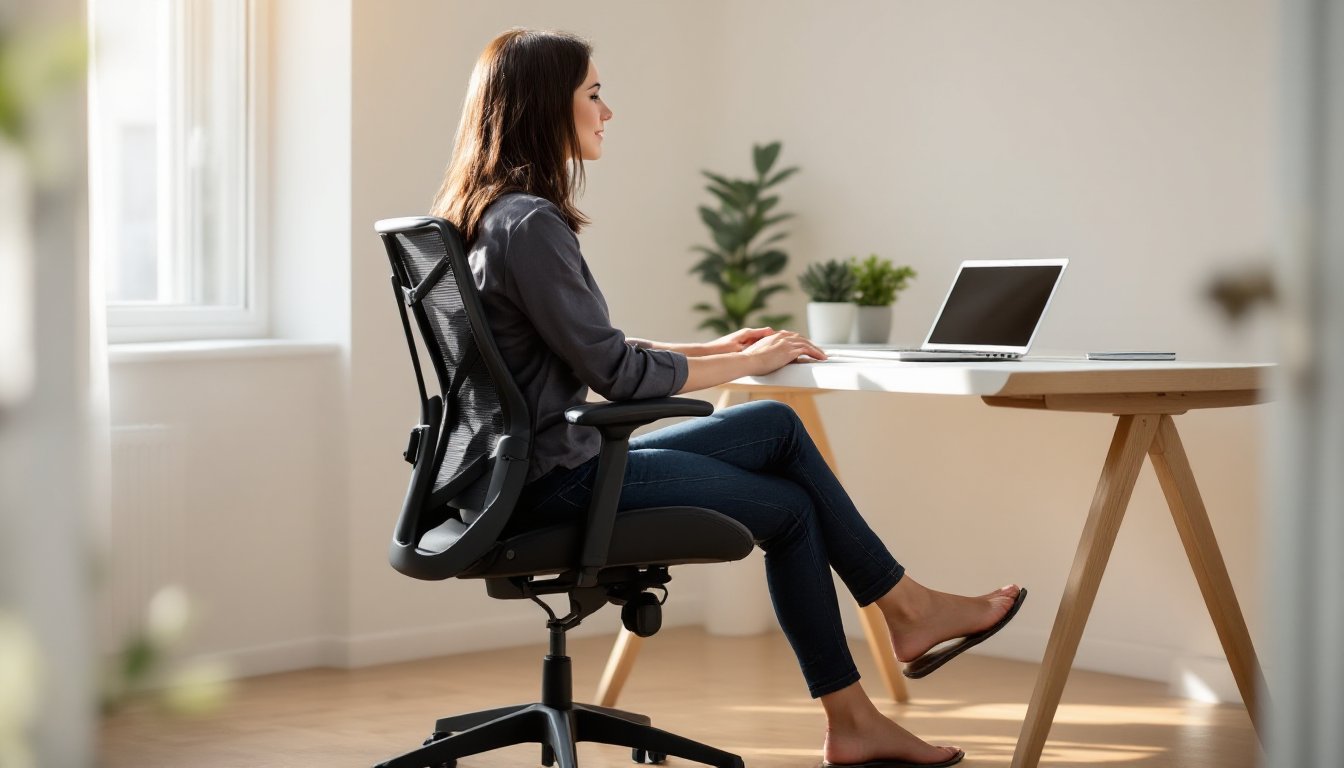
Start with seat height. Adjust so your feet rest flat on the floor with knees bent at roughly 90 degrees. Your thighs should be parallel to the ground or angled slightly downward. If the chair doesn’t go low enough, you’ll need a footrest, not ideal, but functional. Look for adjustable footrests rather than fixed ones so you can dial in the exact angle.
Next, adjust seat depth. Slide the seat pan forward until there’s 2-3 inches of space between the seat edge and the back of your knees when you’re sitting all the way back. This ensures full thigh support without cutting off circulation.
Set lumbar support by adjusting the height so the curve or pad sits at the small of your back, that inward curve above your hips. Then adjust the depth (if available) so it gently pushes your lower back forward without forcing you to sit on the front edge of the seat. You should feel supported, not shoved.
Adjust armrests so your elbows rest comfortably at 90 degrees with shoulders relaxed. Arms shouldn’t push your shoulders up or force you to reach. If the chair arms don’t go low enough, it’s better to remove them entirely than to develop chronic shoulder tension.
Finally, tweak backrest tilt and tension. Most ergonomic chairs have a tilt lock and tension knob. Set the tension so the backrest reclines with gentle pressure but doesn’t slam forward when you lean back. Lock the tilt at a slight recline (100-110 degrees) for tasks like reading, or leave it free for dynamic movement during calls.
For DIYers who enjoy building their own furniture, platforms like Ana White offer free plans for desks and workstations, but resist the urge to build your own office chair. Ergonomic seating requires precision engineering, tested materials, and adjustability mechanisms that aren’t practical for home woodworking.
PPE reminder: When assembling any office chair, wear safety glasses during installation, spring-loaded mechanisms and compressed gas cylinders can cause injury if mishandled. Follow the manufacturer’s torque specs for bolts: over-tightening can crack plastic components or strip threads.
Conclusion
Ergonomic office chairs for shorter individuals aren’t a niche luxury, they’re a functional necessity for anyone spending hours at a desk. The right chair adjusts down to fit your frame, supports your lower back where it actually curves, and lets you plant your feet flat without compromise. Measure yourself, compare those numbers to published specs, and don’t settle for “close enough.” Your back will thank you a decade from now.