Shopping for a faux leather office chair isn’t just about finding something that looks sharp, it’s about balancing comfort, durability, and budget without sacrificing the professional appearance of a home workspace. Faux leather offers the upscale look of genuine leather at a fraction of the cost, but not all synthetic upholstery is created equal. Some chairs crack and peel within a year, while others hold up through years of daily use. This guide walks through what separates a solid faux leather chair from a regrettable purchase, covering ergonomics, materials, maintenance, and common pitfalls to dodge.
Table of Contents
ToggleKey Takeaways
- A faux leather office chair combines affordability ($150–$300) with professional appearance, though PU leather outlasts lower-grade PVC by several years due to superior durability in high-friction areas.
- Proper ergonomics—including adjustable lumbar support, 4D armrests, and synchro-tilt mechanisms—matter more than upholstery choice for long-term comfort during extended work sessions.
- Weekly cleaning with a microfiber cloth and water, combined with quarterly conditioning treatments and UV protection, significantly extends faux leather lifespan and prevents peeling and cracking.
- Darker faux leather colors (black, brown, tan) hide wear, staining, and color transfer better than light shades, making them more practical for daily home office use.
- Flattened cushions and peeling can be minimized by selecting chairs with high-density foam (2.5 lb or higher) and rotating pressure points, avoiding sitting in the same spot consistently.
- Regular maintenance like tightening loose hardware every 3–4 months and using a soft brush vacuum attachment prevents structural issues and material degradation.
What Is a Faux Leather Office Chair and Why Choose One?
A faux leather office chair uses synthetic upholstery, typically polyurethane (PU) or polyvinyl chloride (PVC), bonded to a fabric or polyester backing to mimic the look and feel of genuine leather. PU leather is softer, more breathable, and generally higher quality than PVC, which tends to be stiffer and less durable.
Homeowners choose faux leather for a few practical reasons. First, it’s budget-friendly: a mid-range faux leather executive chair runs $150–$300, while comparable genuine leather models start around $600. Second, it’s low-maintenance, spills wipe off easily, and there’s no need for leather conditioner. Third, it’s vegan and doesn’t involve animal hides, which matters to some buyers.
The trade-off? Longevity. Genuine leather develops a patina and can last decades with care. Faux leather, especially lower-grade PVC, often starts peeling or cracking after 2–4 years of heavy use, particularly in high-friction areas like armrests and the seat cushion. If you’re furnishing a home office on a budget or expect to upgrade furniture every few years, faux leather is a sensible pick.
Key Benefits of Faux Leather Office Chairs
Easy cleaning tops the list. Unlike fabric chairs that absorb coffee spills and pet hair, faux leather surfaces can be wiped down with a damp microfiber cloth and mild soap. This makes them ideal for multi-use spaces where kids or pets might wander into the home office.
Professional appearance is another draw. A faux leather executive chair with tufted detailing or contrast stitching immediately elevates a workspace’s look, especially on video calls. For anyone transitioning from a corporate office to a home setup, matching that polished aesthetic matters, and faux leather delivers it without the sticker shock.
Variety in styles is broader than many buyers expect. Faux leather chairs range from sleek mid-century modern designs with walnut armrests to industrial-style task chairs with exposed metal frames. Sites focused on interior design ideas showcase how faux leather seating integrates into everything from minimalist Scandinavian offices to maximalist eclectic spaces.
Temperature neutrality gives faux leather an edge over genuine leather in some climates. Leather chairs can feel cold in winter and sticky in summer. Quality PU faux leather stays more neutral year-round, though it’s still less breathable than mesh or fabric upholstery.
How to Choose the Right Faux Leather Office Chair for Your Home Office
Ergonomic Features to Look For
A chair’s upholstery is secondary to how well it supports the body during long work sessions. Start with lumbar support, either built-in or adjustable. Chairs without lower back support force users into poor posture, leading to discomfort after a couple of hours.
Seat depth should allow 2–4 inches of clearance between the back of the knees and the seat edge when sitting all the way back. Most adjustable chairs offer seat depth adjustment via a sliding mechanism: budget models skip this, which is fine for average-height users but problematic for anyone under 5’4″ or over 6’2″.
Armrest adjustability matters more than most first-time buyers realize. Fixed-height armrests cause shoulder strain if they’re too high or force hunching if they’re too low. Look for 4D armrests (height, width, depth, and angle adjustment) if the budget allows. At minimum, get height-adjustable arms.
Tilt mechanism affects how the chair moves. A basic tilt lock lets users recline and lock at one angle. A synchro-tilt mechanism adjusts the seat and backrest at different ratios, keeping feet flat on the floor while reclining, far more comfortable for mid-afternoon breaks. Check the weight capacity, too: most faux leather office chairs support 250–300 lbs, but heavy-duty models go up to 400 lbs.
Style and Design Considerations
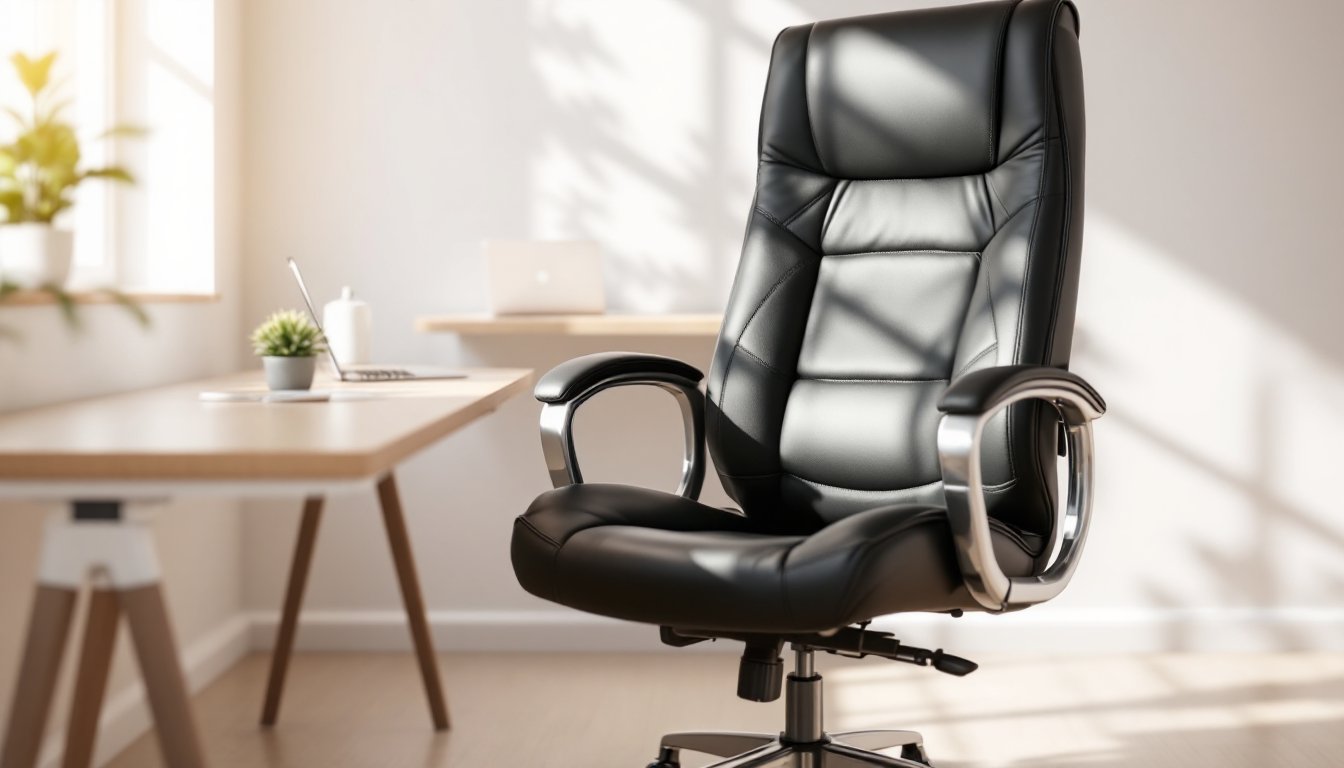
Faux leather office chairs come in three broad style categories: executive, task, and gaming. Executive chairs feature high backs, padded armrests, and tufted or quilted upholstery, they’re bulkier and make a statement. Task chairs are lower-profile, often with mesh or fabric accents, and fit tighter workspaces. Gaming chairs, recognizable by their bucket-seat shape and bold color blocking, offer aggressive lumbar support but polarize design-wise.
Color choice is more strategic than it seems. Black faux leather hides wear and staining better than lighter shades but shows dust and scratches more prominently. Brown and tan faux leather fits warmer, traditional offices and ages more gracefully as minor scuffing blends into the texture. White and gray look clean and modern but require frequent wiping and show discoloration from jeans or dyed fabrics over time.
Frame material impacts both aesthetics and durability. Metal frames (usually steel) support higher weight capacities and pair with industrial or modern decor. Wood accents, common on mid-century and Scandinavian-style chairs, add warmth but limit adjustability since wooden armrests rarely telescope or pivot. Plastic frames keep costs down but can flex or crack under heavy use: avoid them for daily 8+ hour shifts.
Maintaining and Cleaning Your Faux Leather Office Chair
Proper care extends the lifespan of faux leather upholstery significantly. Wipe the chair down weekly with a microfiber cloth dampened with water or a 50/50 mix of water and white vinegar. Avoid ammonia-based cleaners, bleach, or abrasive scrubbers, they break down the PU or PVC coating and accelerate peeling.
For deeper stains (ink, food, grease), use isopropyl alcohol on a cotton pad, blotting rather than rubbing. Test any cleaner on an inconspicuous area first, like the underside of the seat. Some faux leathers react poorly to alcohol and lose their sheen.
Conditioning isn’t necessary like it is with genuine leather, but applying a thin layer of vinyl and faux leather conditioner every 3–4 months helps prevent drying and cracking, especially in low-humidity climates or homes with forced-air heating. Apply sparingly and buff off excess to avoid a greasy residue.
Keep the chair out of direct sunlight. UV exposure fades color and makes faux leather brittle. If the desk sits near a window, consider blackout shades or repositioning the chair. Similarly, avoid placing space heaters or heating vents directly next to the chair, heat accelerates material breakdown.
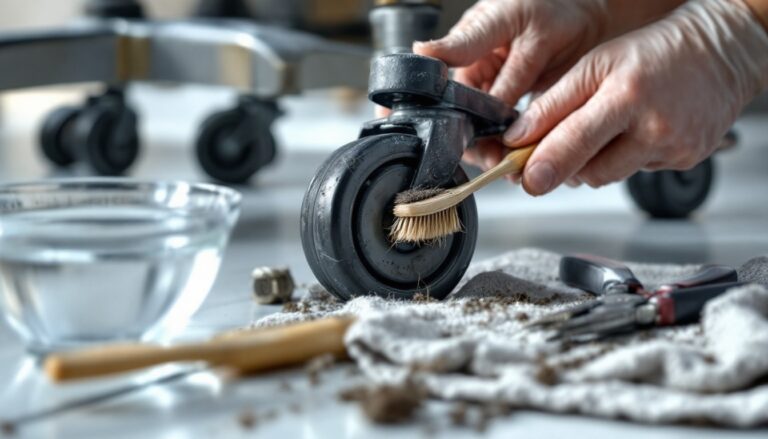
Dust and debris in seams and stitching can act like sandpaper over time. Use a vacuum with a soft brush attachment monthly to clear crumbs, pet hair, and dust from crevices. Pay attention to the gap between the seat and backrest, where grime accumulates.
Common Issues with Faux Leather Chairs and How to Avoid Them
Peeling and cracking is the number-one complaint with faux leather seating. It usually starts where body heat and friction are highest: the center of the seat cushion, armrest tops, and lumbar area. Lower-quality PVC chairs begin peeling within 12–18 months. PU leather lasts longer, but once peeling starts, there’s no real fix, patching kits are cosmetic at best.
To minimize this, choose chairs with bonded PU leather rated for commercial or contract use. These versions have thicker coatings and reinforced backing. Also, avoid sitting in the same spot every day: rotating pressure points slightly can extend upholstery life.
Flattened cushions plague chairs with low-density foam. Most budget faux leather chairs use 1.8–2.0 lb density foam, which compresses permanently after 6–12 months of daily use. Look for chairs specifying high-density foam (2.5 lb or higher) or cold-cure molded foam, which retains shape longer. Some models include memory foam seat toppers, which help but add heat retention.
Odor is common with new faux leather chairs, especially those using PVC. The off-gassing smell, a chemical, plasticky scent, usually fades within a week if the chair is aired out in a ventilated room. If it persists beyond two weeks, the chair likely uses lower-grade materials. Wipe it down with a vinegar solution and leave it near an open window.
Heat and sweat buildup make faux leather uncomfortable in warm climates or during summer months. Unlike breathable mesh, faux leather traps body heat. Solutions include using a mesh lumbar cushion or seat cushion cover made from breathable fabric, or simply opting for a hybrid chair with faux leather accents and mesh panels. Many modern home decor ideas incorporate mixed-material office furniture to balance aesthetics and comfort.
Loose hardware develops over time as screws and bolts loosen from daily rocking and reclining. Every 3–4 months, check all visible screws (seat base, armrest mounts, backrest pivot) and tighten with an Allen key or Phillips screwdriver. Keep the assembly hardware packet that comes with the chair, replacement bolts and washers are often proprietary sizes.
Color transfer happens when dyed denim, gym shorts, or colored fabrics rub against light-colored faux leather. The dye migrates into the upholstery and doesn’t come out. If you own a white or beige faux leather chair, avoid wearing freshly dyed or dark clothing while seated, or throw a washable seat cover over it during casual use. Choosing darker faux leather shades, as seen in many home styling guides, sidesteps this issue entirely.
Finally, assembly quality varies wildly. Chairs shipped in flat-pack boxes require careful assembly, misaligned holes, crossed threads, or over-tightened bolts can compromise the chair’s stability and void warranties. Follow instructions exactly, use the provided tools, and don’t force parts together. If a bolt doesn’t thread smoothly, back it out and realign rather than stripping the threads.