An office chair takes a beating. Spilled coffee, body oils, dust, crumbs, and everyday grime accumulate faster than most people realize. Left unchecked, that buildup doesn’t just look bad, it can degrade upholstery, clog mechanisms, and even affect your health if allergens settle into fabric or mesh. The good news? Most office chairs can be thoroughly cleaned with basic supplies and a Saturday afternoon. Whether you’re dealing with fabric, leather, faux leather, or mesh, this guide walks through the exact process to restore your chair without damaging materials or voiding warranties.
Table of Contents
ToggleKey Takeaways
- Cleaning an office chair regularly prevents upholstery degradation, clogged mechanisms, and health issues from accumulated dust, oils, and allergens.
- Always check your chair’s care tag for material codes (S, W, SW, or X) before using any cleaning solution to avoid permanent damage or staining.
- Fabric chairs require a two-stage process: vacuuming debris followed by spot-treating stains with a mild dish soap solution and blotting (never rubbing) to prevent grime from pushing deeper into fibers.
- Leather and faux leather chairs need gentle treatment with pH-neutral cleaners applied to a damp cloth rather than sprayed directly, followed by immediate drying to prevent cracking or peeling.
- Mesh office chairs benefit from compressed air first to remove trapped dust, then gentle wiping with diluted soap solution while avoiding harsh solvents that can weaken polymer fibers.
- Don’t overlook wheels, armrests, and the base when cleaning—caster maintenance every 3–4 months improves mobility, while leather chairs should be conditioned every 6–12 months to extend their lifespan.
What You’ll Need to Clean Your Office Chair
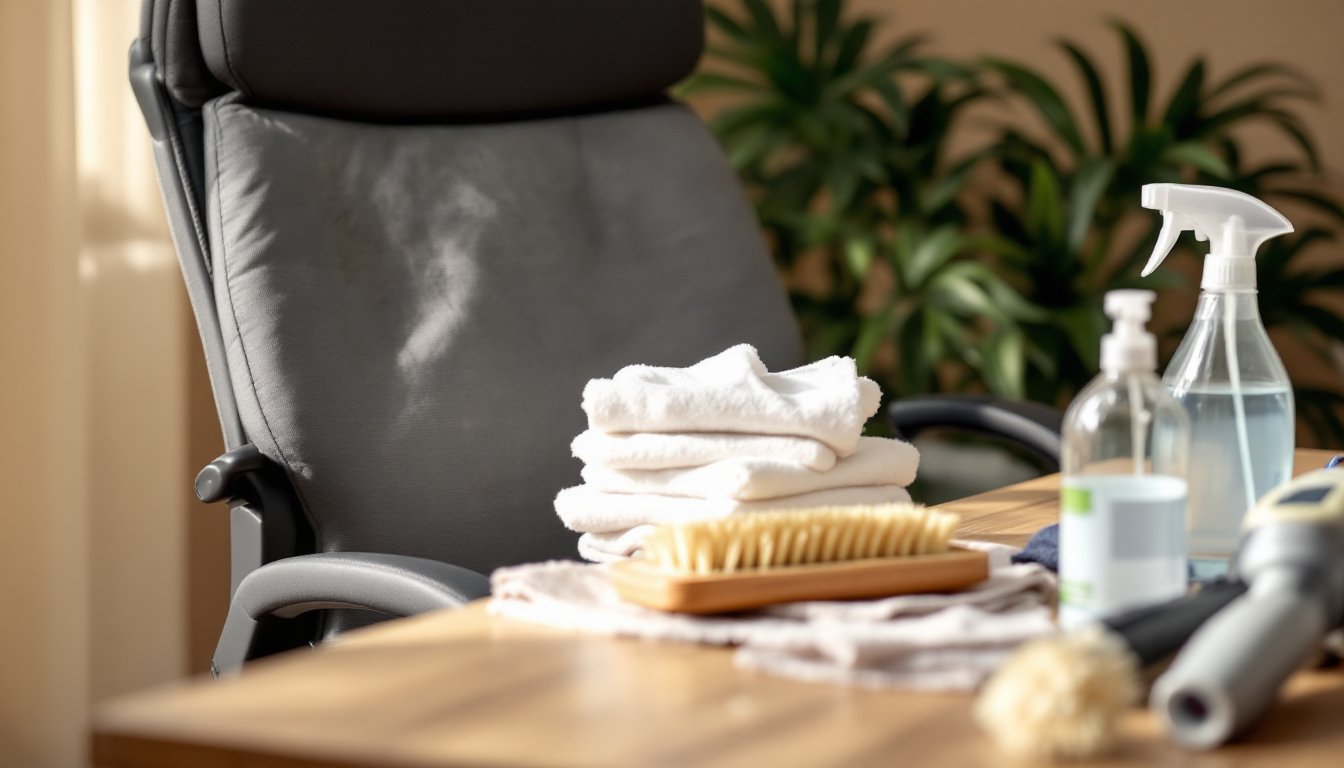
Gather your supplies before you start. The exact list depends on your chair’s material, but most cleaning jobs require:
General supplies:
- Vacuum with upholstery and crevice attachments
- Microfiber cloths (at least 4-6)
- Spray bottle for mixing solutions
- Soft-bristle brush or old toothbrush
- Mild dish soap (Dawn or similar)
- Warm water
- Rubbing alcohol (70% isopropyl)
- White vinegar
Material-specific additions:
- For fabric: Upholstery cleaner (Folex or enzyme-based cleaner) and optional steam cleaner
- For leather/faux leather: pH-neutral leather cleaner and conditioner
- For mesh: Lint roller and compressed air
Safety gear:
- Rubber gloves if you’re sensitive to cleaning agents
- Work in a ventilated area, especially when using alcohol or commercial cleaners
Check your chair’s care tag or manufacturer guidelines before using any product. Some fabrics are labeled “S” (solvent-based cleaners only), “W” (water-based), “SW” (either), or “X” (vacuum only). Ignoring these codes can cause permanent staining or fabric damage.
How to Clean a Fabric Office Chair
Fabric chairs are common in home offices, but they’re also magnets for dust, spills, and odors. Deep cleaning requires two stages: removing surface debris and treating embedded stains.
Vacuum and Remove Loose Debris
Start by removing seat cushions if they’re detachable. Use the upholstery attachment on your vacuum to pull out dust, hair, and crumbs from the seat, backrest, and crevices. Pay special attention to seams and the gap where the seat meets the backrest, debris packs in there.
Switch to the crevice tool for tight spots around armrests and adjustment levers. If your chair has deep tufting or textured fabric, go over it twice in different directions to lift embedded particles.
For pet hair or lint that the vacuum misses, roll a lint roller across the surface or wrap packing tape (sticky side out) around your hand and blot the fabric.
Treat Stains and Deep Clean the Upholstery
Mix a cleaning solution based on your fabric type. For most synthetic upholstery, combine 1 tablespoon mild dish soap with 2 cups warm water in a spray bottle. For tougher stains, use a commercial upholstery cleaner following label directions.
Test the solution on a hidden area, under the seat or behind the backrest, and wait 10 minutes to check for discoloration or fabric damage.
Spray the solution lightly onto stained areas. Don’t soak the fabric: excess moisture can seep into foam padding and cause mildew. Work the cleaner into the stain using a soft-bristle brush in circular motions. For set-in stains like coffee or ink, let the cleaner sit for 5-10 minutes before blotting with a clean microfiber cloth.
Blot, don’t rub, to lift the stain. Rubbing pushes grime deeper into fibers. Repeat until the stain lifts, then go over the area with a cloth dampened in plain water to remove soap residue.
For a full deep clean, home cleaning experts often recommend a handheld steam cleaner for fabric upholstery. Steam penetrates fibers, kills bacteria, and lifts embedded dirt without harsh chemicals. Hold the steamer 6 inches from the fabric and move in slow, overlapping passes. Let the chair air-dry completely, typically 4-6 hours, before using it again.
How to Clean a Leather or Faux Leather Office Chair
Leather and faux leather (polyurethane) require gentler treatment than fabric. Harsh cleaners or excessive water can crack, discolor, or peel the surface.
Start by vacuuming with the upholstery brush to remove dust. For crevices and stitching, use a dry microfiber cloth or the crevice tool.
Mix a mild cleaning solution: 1 part white vinegar to 2 parts water, or use a pH-neutral leather cleaner designed for upholstery. Dampen a microfiber cloth with the solution, never spray directly onto the chair, as excess liquid can seep into seams and damage padding.
Wipe down the entire surface in sections, working from top to bottom. For scuffs or sticky spots, apply light pressure with the damp cloth. Stubborn marks often respond to a small amount of rubbing alcohol on a cloth, but test first, some faux leathers will discolor.
Dry immediately with a clean, dry microfiber cloth. Leather should never stay wet for long.
If you’re working with genuine leather, follow up with a leather conditioner every 6-12 months to prevent cracking. Apply a small amount to a cloth and rub it into the surface in circular motions. Buff with a dry cloth after 10-15 minutes. Skip the conditioner on faux leather, it won’t absorb and may leave a greasy residue.
According to upholstery care guides, faux leather chairs typically last 3-5 years with regular cleaning, while genuine leather can go decades if properly maintained.
How to Clean a Mesh Office Chair
Mesh chairs are popular for breathability, but the woven material traps dust and oils in ways that aren’t immediately visible. Cleaning mesh is straightforward but requires care to avoid stretching or tearing the fabric.
Start with compressed air to blow dust out of the mesh weave. Hold the can upright and spray in short bursts, working from top to bottom. This step is especially important if you have a mesh backrest with tight weave.
Vacuum the mesh using the upholstery attachment on low suction. High suction can pull and distort the mesh, especially on cheaper chairs.
Mix 1 tablespoon dish soap with 2 cups warm water. Dip a microfiber cloth into the solution, wring it nearly dry, and wipe down the mesh in straight lines. Don’t scrub aggressively, mesh can snag or stretch.
For stubborn spots (pen marks, food stains), dampen an old toothbrush with the soapy water and gently work the bristles over the stain. Blot with a damp cloth to rinse, then blot again with a dry cloth.
Mesh dries quickly, usually within 1-2 hours. If moisture lingers, aim a fan at the chair or leave it in a sunny, well-ventilated spot.
Avoid using harsh solvents, bleach, or alcohol-based cleaners on mesh. These can weaken the polymer fibers and cause premature sagging.
Cleaning the Base, Wheels, and Armrests
The chair’s frame, wheels, and armrests collect as much grime as the seat, sometimes more, but they’re often overlooked.
Armrests: Most are plastic, padded vinyl, or hard polyurethane. Wipe them down with a cloth dampened in soapy water (same mix as above). For textured or padded armrests, use a soft-bristle brush to work cleaner into grooves. Dry thoroughly.
If armrests are sticky or grimy from lotion or hand oils, use rubbing alcohol on a microfiber cloth. It cuts through residue without leaving streaks.
Base and frame: Wipe metal or plastic bases with soapy water and a cloth. For powder-coated metal, avoid abrasive scrubbers, they’ll scratch the finish. Chrome bases can be polished with a dab of white vinegar or glass cleaner for extra shine.
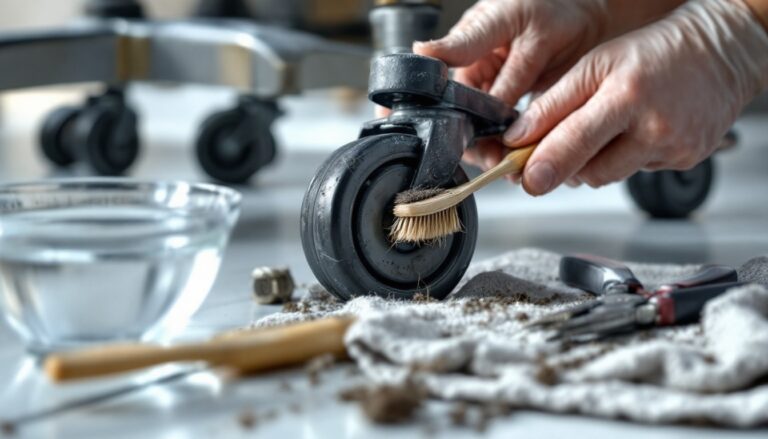
Wheels (casters): Flip the chair over or tilt it back. Pull hair, thread, and debris off each wheel by hand or with scissors. You’ll likely find a surprising amount.
Wipe each wheel with a damp cloth. For wheels that roll poorly, remove them by pulling straight out (most are friction-fit) and rinse under warm water. Dry completely before reattaching.
If wheels are still sticky, wipe the axles with rubbing alcohol. According to home maintenance tips, cleaning casters every 3-4 months improves mobility and protects flooring from buildup.
Once everything’s clean and dry, reassemble any detached parts, adjust the chair to your preferred height, and you’re done. A well-cleaned office chair not only looks better, it also lasts longer and supports better posture.