Choosing the right office chair isn’t just about looks, it’s about matching form and function to how you actually work. Low back office chairs have surged in popularity among home office setups, especially as more people design workspaces that double as living areas. Unlike their high-back cousins that dominate conference rooms, low back chairs offer a sleeker profile and surprising versatility. They’re not for everyone, though. Understanding when a low back design makes sense, and when it doesn’t, can save you from buyer’s remorse and backaches down the line.
Table of Contents
ToggleKey Takeaways
- Low back office chairs excel in compact home offices and dynamic work environments, offering enhanced mobility and a sleeker visual profile compared to high-back alternatives.
- Critical features for a quality low back office chair include adjustable lumbar support, 2-4 inches of seat depth adjustment, and 3-4D adjustable armrests that prevent awkward postures.
- Low back chairs work best for users under 6 feet tall, those who shift positions frequently, and multi-monitor setups, but aren’t suitable for eight-plus hour sessions or users with existing neck and upper back issues.
- Proper setup and maintenance are essential: take 15-20 minutes to adjust seat height, lumbar support, and armrest position, and tighten bolts every 6-8 months to maximize chair longevity.
- A low back office chair should be paired with a properly-sized desk (29-30 inches standard) and complemented by 45-50 minute standing breaks to prevent neck and shoulder fatigue.
- Style a low back office chair to match your aesthetic—from minimalist monochrome designs to mid-century modern walnut frames—while prioritizing ergonomic comfort over visual appeal alone.
What Is a Low Back Office Chair and Who Should Use One?
A low back office chair features a backrest that typically extends to the mid-back or lower shoulder blades, stopping well below the head and upper shoulders. The backrest height usually measures 16 to 20 inches from the seat pan, compared to 24+ inches for high-back executive models.
These chairs work best for specific users and situations. If someone shifts positions frequently, leans forward while working, or operates in a compact workspace, a low back design won’t cage them in. They’re ideal for tasks that require constant pivoting, graphic designers working between a drawing tablet and keyboard, or anyone managing multiple monitors.
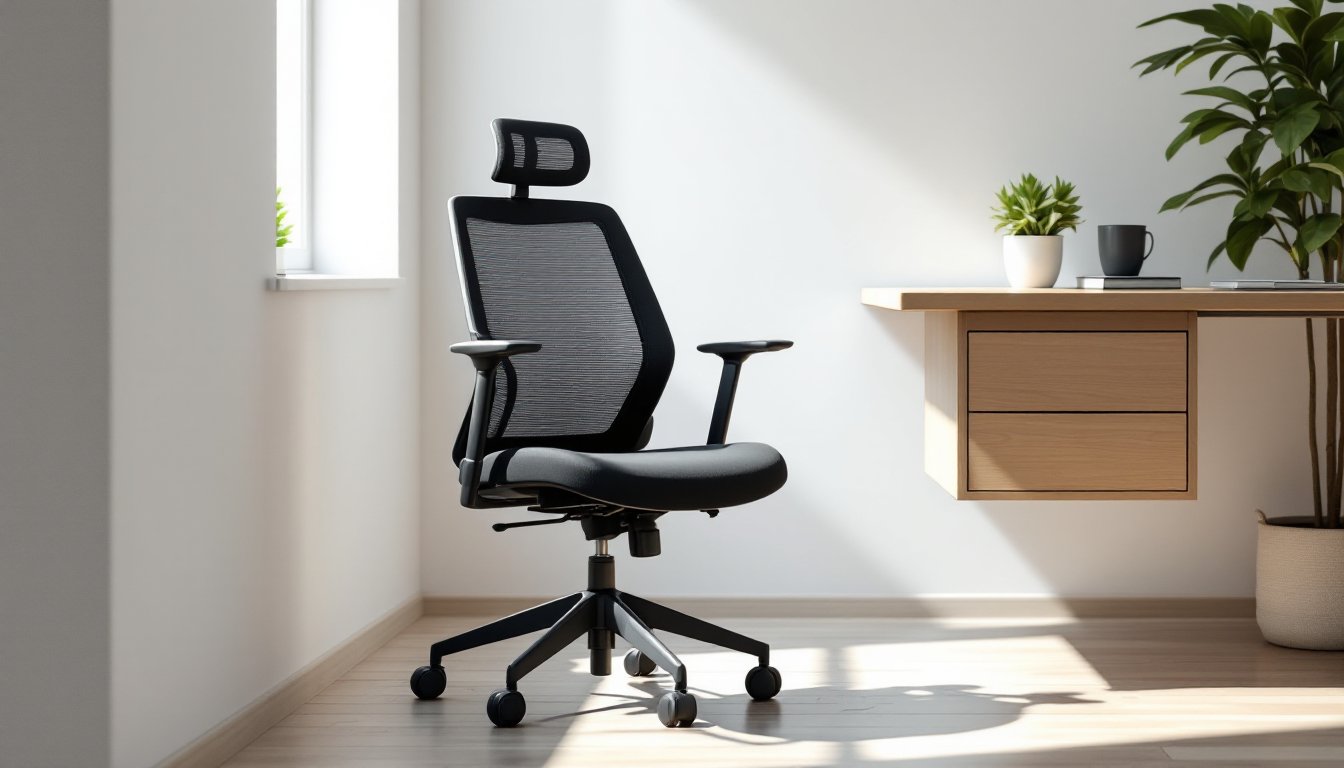
That said, low back chairs aren’t universal solutions. Users who spend eight-plus hours seated, have existing neck or upper back issues, or prefer to recline while reading documents should look elsewhere. The reduced support above the lumbar region means the upper spine and neck muscles work harder to maintain posture. If someone’s work style involves leaning back to think or take calls, a high-back chair with headrest provides better ergonomic support.
Height also matters. Taller individuals, roughly 6 feet and above, may find low backs hit at awkward spots on their spine, creating pressure points rather than support zones. Conversely, users under 5’6″ often find low back chairs align perfectly with their proportions.
Key Benefits of Choosing a Low Back Office Chair for Your Home Office
Enhanced Mobility and Freedom of Movement
The primary advantage is unrestricted shoulder and arm movement. High backs can interfere with reaching, twisting, or swiveling, movements that matter when grabbing files from a side cabinet or adjusting equipment. Low back chairs eliminate that physical barrier.
This mobility benefit extends to multi-tasking setups. Users who switch between standing desk mode and seated work, or who frequently move between workstations, appreciate the lighter weight. Most low back models weigh 25-35 pounds compared to 40-50 pounds for fully-loaded executive chairs, making them easier to reposition.
The open design also encourages what ergonomists call “dynamic sitting”, subtle position changes throughout the day that prevent static muscle fatigue. Without a high back to lean against, users naturally shift their posture more often, which can improve circulation in the lower body.
Space-Saving Design for Compact Workspaces
Visually, low back chairs occupy less vertical space, making rooms feel larger. In home offices carved from corners of bedrooms or living rooms, that perception matters. A bulky executive chair can dominate a 10×10 foot space, while a low back model blends into the background.
The reduced footprint also affects furniture placement. High backs require clearance from walls and shelves, typically 6-8 inches, to allow reclining. Low backs can tuck directly under desks when not in use, freeing floor space in tight quarters. This makes them particularly popular in small space living setups where every square foot counts.
Storage and transport becomes simpler too. Many low back chairs disassemble or stack more easily than high-back models, useful for renters who move frequently or anyone reconfiguring a multi-purpose room.
Essential Features to Look for When Selecting a Low Back Office Chair
Start with lumbar support, non-negotiable even on low back models. Look for adjustable lumbar mechanisms that move up and down at least 2-3 inches and in/out to match the spine’s natural curve. Some budget chairs fake this with a static foam bulge that doesn’t adjust: that’s a deal-breaker.
Seat depth adjustment matters more on low backs because users can’t compensate by reclining. The seat pan should allow 2-4 inches of clearance behind the knees when sitting fully back. Most quality chairs offer a slide-adjust mechanism with at least 2 inches of range. Check that the seat width accommodates the user, standard is 18-20 inches, but wider models reach 22 inches.
Armrests should adjust in four dimensions: height, width, depth, and pivot angle. Fixed arms force awkward postures. Height-only adjustment is bare minimum: get 3D or 4D arms if budget allows. Arms should allow the elbows to rest at a 90-degree angle with shoulders relaxed.
The base and casters need to match the floor type. Hard casters for carpet (usually gray or black plastic), soft casters for hardwood or tile (often clear polyurethane). A five-star base in aluminum or reinforced nylon beats stamped steel for durability. Class 4 gas cylinders handle up to 300 pounds: verify the weight rating.
Upholstery choice affects longevity. Mesh backs provide better airflow but can sag after 3-5 years. Molded foam with fabric holds shape longer but traps heat. Leather or leatherette looks sharp but requires climate control, it cracks in dry environments and gets sticky in humidity. For a home office that isn’t climate-controlled year-round, a quality woven fabric or performance knit splits the difference.
Finally, check the tilt mechanism. Synchro-tilt (where back and seat move at different ratios) beats basic tilt for ergonomics. Tilt tension should adjust with a knob underneath the seat to match the user’s weight. Tilt lock at multiple positions lets users secure the chair upright for focused work.
How to Style a Low Back Office Chair in Different Home Office Aesthetics
In modern/minimalist spaces, low back chairs reinforce clean lines. Stick with monochrome upholstery, black, white, or gray mesh, and chrome or matte black frames. The visual lightness complements floating desks and wall-mounted storage. Avoid chairs with heavy padding or decorative stitching that adds visual weight.
For industrial aesthetics, pair metal-frame low backs with distressed wood desks and exposed shelving. Look for chairs with visible hardware, rivet details, or powder-coated steel bases. Leather or faux-leather seats in cognac or charcoal tie into the warehouse vibe. The Enterprise Low Back Office Chair in black illustrates how straightforward design works in raw, utilitarian settings.
Mid-century modern setups call for molded plywood or curved plastic shells in low back form. Walnut-toned wood arms and tapered legs echo classic Eames or Saarinen designs. Upholstery in burnt orange, olive, or mustard adds period-appropriate color without overpowering the space.
In Scandinavian/hygge offices, light wood frames with natural fabric upholstery maintain the airy, cozy feel. Look for ash or oak bases with wool-blend or linen seats in cream, light gray, or soft blue. The goal is warmth without clutter, low backs help maintain sight lines to plants, textiles, and other tactile elements.
For eclectic or bohemian spaces, low back chairs become a neutral anchor among pattern and color. A simple black or tan chair grounds a desk area surrounded by patterned rugs, gallery walls, and collected objects. This is also where IKEA furniture hacks shine, budget low back models can be customized with painted frames, reupholstered seats, or added cushions to match unique color schemes.
Traditional or transitional offices can incorporate low backs if they feature button tufting, nailhead trim, or wood accents. Look for styles with walnut or mahogany-stained arms and classic fabrics like herringbone or subtle plaids. The lower profile keeps the look fresh rather than stuffy.
Common Mistakes to Avoid When Using a Low Back Office Chair
The biggest error is assuming any low back chair equals ergonomic seating. Without proper adjustments, even high-quality models cause problems. Take 15-20 minutes on day one to dial in seat height (feet flat, thighs parallel to floor), lumbar support depth, and armrest position. Most people skip this and wonder why they’re sore after a week.
Another mistake is pairing a low back chair with a too-high desk. Standard desk height is 29-30 inches, which works for users 5’8″ to 6’0″ with proper chair adjustment. Shorter or taller users need adjustable-height desks or keyboard trays. When the desk is fixed and too high, people compensate by raising the chair, which then leaves feet dangling, a recipe for lower back strain.
Using a low back chair for marathon sessions without breaks is asking for trouble. The reduced upper back support means neck and shoulder muscles fatigue faster. Set a timer for 45-50 minute intervals and stand, stretch, or walk for five minutes. This isn’t a chair failure: it’s acknowledging the design trade-offs.
Neglecting maintenance shortens chair lifespan dramatically. Tighten bolts every 6-8 months, they loosen with use and cause wobbling that feels like structural failure. Vacuum fabric upholstery monthly: dust and debris grind into fibers and break them down. Lubricate the gas cylinder and tilt mechanism annually with silicone spray (not WD-40, which attracts dirt). Replace worn casters before they scratch floors or make rolling difficult.
Finally, don’t ignore incompatibility signs. If someone experiences persistent upper back or neck pain after two weeks of proper use, the chair isn’t the right fit. Low backs aren’t one-size-fits-all. Switching to a mid-back or high-back model isn’t defeat, it’s matching the tool to the task. Ergonomics trump aesthetics when it comes to daily comfort and long-term health.