In the world of office design, bland cubicles and drab colors are so yesterday. Today’s workspace should inspire creativity and boost productivity, not make employees feel like they’re trapped in a never-ending game of “Where’s the coffee?” With the right design ideas, an office can transform from a place of mundane tasks to a vibrant hub of innovation and collaboration.
Contemporary Office Design Ideas
Contemporary office design emphasizes flexibility, collaboration, and innovation. These elements play a crucial role in creating an engaging workspace.
Open-Concept Layouts
Open-concept layouts promote communication and teamwork among employees. This design often features spacious areas with minimal barriers, allowing natural light to flow freely. Collaborative zones encourage group discussions and brainstorming sessions. Furthermore, a lack of cubicles fosters a sense of community within the workplace. Companies frequently implement acoustic panels to reduce noise while maintaining an open environment. Many organizations find that open spaces enhance employee morale and creativity.
Multifunctional Spaces
Multifunctional spaces maximize the utility of available areas. These designs integrate various work styles, catering to individual preferences for focused tasks or collaborative efforts. Quiet zones may coexist with vibrant meeting areas, allowing employees to choose their ideal setting. Flexible furniture arrangements enable quick transitions between different activities, like team meetings or informal gatherings. This adaptability contributes to a dynamic atmosphere that supports diverse workflows. Many modern offices create multifunctional spaces to facilitate both productivity and relaxation.
Creative Office Design Elements
Creative office design elements significantly impact productivity and employee well-being. Incorporating thoughtful choices leads to engaging and motivating workspaces.
Color Schemes and Aesthetics
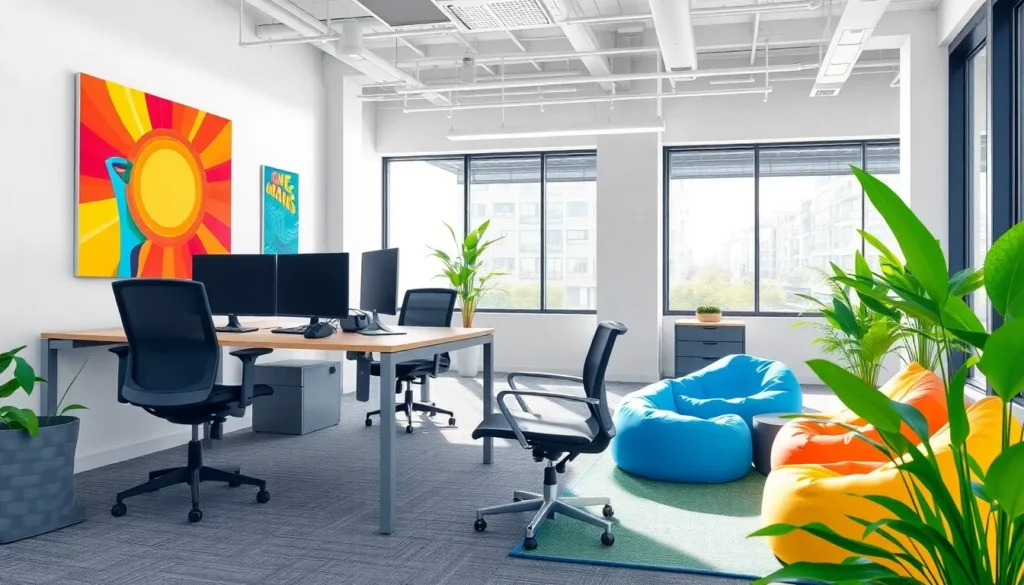
Color schemes influence moods and productivity levels. Bright colors, such as yellow and orange, stimulate creativity, while blue and green promote calmness and concentration. A balanced palette enhances aesthetics, preventing visual clutter. Incorporating artwork, plants, and natural light contributes to a welcoming atmosphere. Patterns and textures add depth and interest, breaking monotony while encouraging individual expression. Choosing colors and designs that align with company values fosters a cohesive brand identity, making the workspace feel like an extension of the organization’s mission.
Furniture and Accessories
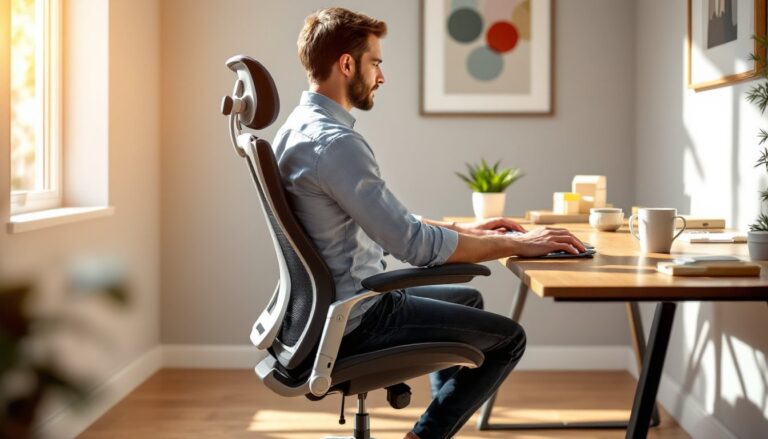
Furniture choices greatly affect functionality and comfort. Ergonomic chairs support posture and reduce strain, promoting health during long hours. Height-adjustable desks cater to various work preferences, enabling both sitting and standing options. Collaboration-friendly seating arrangements foster teamwork and brainstorming. Accessories like writable walls or whiteboards promote creativity and allow for dynamic idea sharing. Bright furnishings or playful elements, like bean bag chairs, enhance a laid-back vibe while inspiring relaxation and informal discussions. Selecting durable and stylish pieces ensures the longevity of the workspace while reflecting the company’s culture.
Sustainable Office Design Ideas
Sustainable office design incorporates practices that minimize environmental impact while enhancing employee well-being. Focusing on eco-friendly solutions fosters a healthier work environment.
Eco-Friendly Materials
Utilizing eco-friendly materials promotes sustainability in office design. Bamboo, reclaimed wood, and recycled metals serve as popular choices for furniture and fixtures. These materials often offer durability without compromising aesthetics. Additionally, low-VOC paints and finishes reduce indoor air pollution, contributing to a healthier environment. Choosing locally sourced products supports regional economies and reduces transportation emissions. Prioritizing sustainability leads to a workspace that reflects corporate responsibility while providing a refreshing and innovative atmosphere.
Biophilic Design Principles
Implementing biophilic design principles connects employees with nature. Incorporating large windows and skylights maximizes natural light and enhances mood. Green walls and indoor plants not only improve air quality but also create a calming ambiance. Additionally, natural elements like water features or wood accents foster a sense of tranquility. Integrating these features leads to increased productivity and employee satisfaction. By emphasizing nature within the workspace, companies cultivate a sustainable environment that positively impacts performance and well-being.
Remote Work Office Design Ideas
Remote work environments can significantly enhance productivity and comfort. Thoughtful design choices create inviting spaces that cater to individual needs.
Home Office Setups
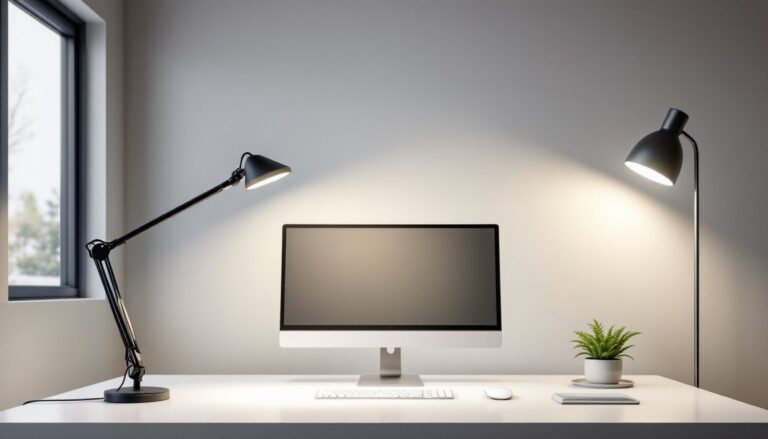
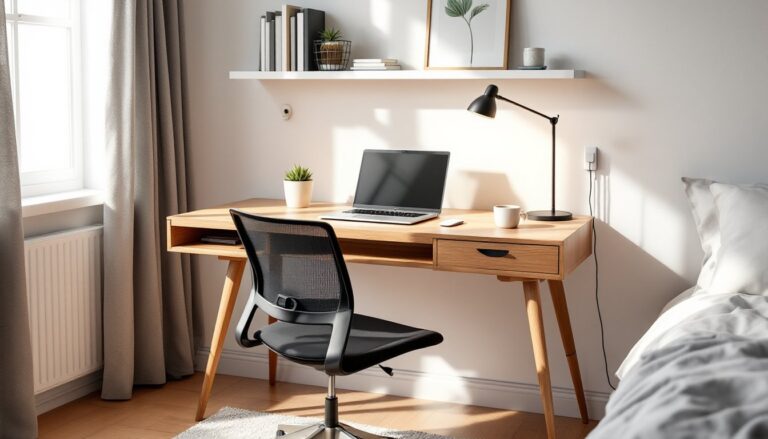
Creating a functional home office requires strategic furniture placement. Ergonomic chairs provide support for long hours, while height-adjustable desks offer flexibility. Well-placed lighting reduces eye strain and enhances focus. Stylish storage solutions keep the workspace organized, preventing clutter from distracting workers. Incorporating personal items, such as artwork or family photos, fosters a sense of belonging and motivation. Additionally, using multifunctional furniture, like foldable tables, maximizes space in smaller areas. These setups encourage productivity and maintain a balance between work and personal life.
Collaboration Tools and Technology
Equipping a home office with the right technology enables seamless collaboration. Video conferencing tools, like Zoom or Microsoft Teams, ensure clear communication among team members. Cloud-based applications allow easy access to shared documents and projects. Employing project management software streamlines task assignments and progress tracking. Additionally, using integrated calendars facilitates effective scheduling of meetings and deadlines. Real-time collaboration features enable team members to brainstorm and share ideas instantly. Prioritizing these tools creates an efficient remote work experience that supports teamwork and productivity.
Embracing innovative office design ideas can transform workspaces into vibrant environments that inspire creativity and enhance productivity. By prioritizing flexibility and collaboration companies can create spaces that adapt to various work styles and foster teamwork. Thoughtful design choices like color schemes natural elements and ergonomic furniture play a significant role in employee well-being and satisfaction.
As organizations continue to evolve the focus on sustainable practices and remote work solutions will be crucial in shaping the future of office design. By integrating these elements companies can cultivate inspiring workspaces that reflect their values and support their employees in achieving their best work.