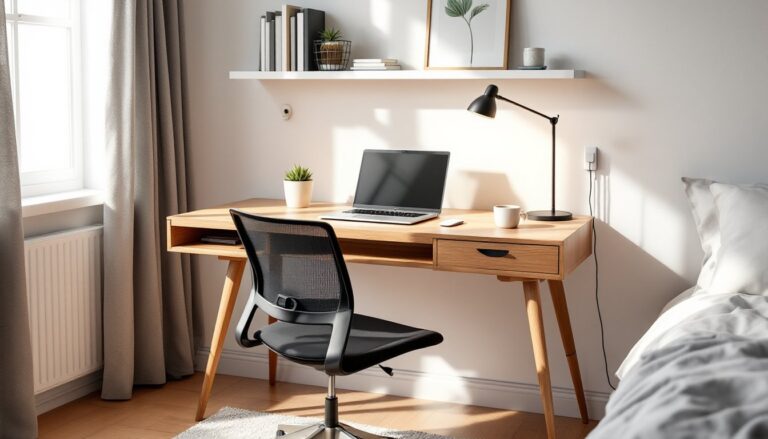
Paper clutter has a sneaky way of taking over home offices. Tax documents, warranties, client files, and receipts multiply faster than dust bunnies under a desk. Without a proper storage system, valuable documents end up stuffed in desk drawers, cardboard boxes, or, worse, scattered across every flat surface in the room. A filing cabinet isn’t glamorous, but it’s the backbone of a functional home office. It keeps critical paperwork accessible, protects documents from damage, and reclaims workspace that chaos tends to swallow. This guide walks through everything needed to pick, place, and actually use a filing cabinet that works.
Table of Contents
ToggleKey Takeaways
- An office filing cabinet is essential for organizing critical documents like mortgages, insurance policies, and financial records that digital storage alone cannot replace.
- Vertical filing cabinets save floor space in tight home offices, while lateral filing cabinets offer better visibility and doubled workspace on top surfaces.
- Proper measurement of available space—accounting for drawer clearance and ceiling height—is crucial before selecting the right filing cabinet size and configuration.
- Establishing a deliberate filing system with broad categories, subcategories, and consistent labeling ensures documents remain accessible and searchable for years.
- Regular purging of outdated documents and strategic styling through paint or hardware swaps keeps your filing cabinet functional and integrated into home office décor.
- Fire-rated filing cabinets and nearby cross-cut shredders provide superior protection for sensitive documents compared to desk drawers or standard cardboard boxes.
Why Every Home Office Needs a Filing Cabinet
Digital storage hasn’t eliminated paper, it just changed what gets printed. Homeowners still need hard copies of mortgage documents, insurance policies, medical records, and estate planning paperwork. Financial advisors and attorneys often require physical signatures and original documents. A filing cabinet creates a dedicated home for these essentials.
Fire safety matters more than most people think. Standard cardboard banker’s boxes offer zero protection from heat, water, or smoke. A steel filing cabinet won’t survive a direct blaze, but it provides significantly better shielding than a desk drawer or closet shelf. For irreplaceable documents, a fire-rated filing cabinet or safe adds another layer of protection.
Organization directly impacts productivity. Hunting for a document wastes time and creates frustration. A well-organized filing system means grabbing what’s needed in seconds instead of tearing apart the office. This becomes critical during tax season, insurance claims, or home sale transactions when documents need to surface fast.
Filing cabinets also handle overflow from other office storage solutions that can’t accommodate letter or legal-size documents. Shelves work for books, but folders slide around. Bins hide what’s inside. Filing cabinets keep papers upright, visible, and accessible without bending, folding, or damaging them.
Types of Office Filing Cabinets for Your Home
Filing cabinets come in two main configurations, each with distinct advantages. The choice depends on available floor space, document volume, and how the office gets used.
Vertical Filing Cabinets
Vertical cabinets are the classic filing cabinet design: tall, narrow, and deep. Standard models measure 15 inches wide by 25-28 inches deep, with heights ranging from 2 to 5 drawers. Each drawer typically holds letter-size or legal-size hanging folders arranged front to back.
Pros:
- Small footprint: Takes up minimal floor space, making it ideal for tight corners or narrow walls.
- Easy placement: Fits between furniture or alongside desks without blocking walkways.
- Lower cost: Generally more affordable than lateral models of similar capacity.
Cons:
- Deep reach: Files in the back of a drawer require leaning over or stretching, which becomes awkward after repeated use.
- Limited visibility: Only one row of folders per drawer means flipping through tabs sequentially.
- Tipping hazard: Tall, narrow cabinets can tip forward if multiple drawers open simultaneously or if not anchored. Always secure vertical cabinets to wall studs using L-brackets or the manufacturer’s anti-tip hardware, this isn’t optional, especially in homes with kids or pets.
Vertical cabinets work best in home offices with limited width but enough depth. They’re also the go-to for single-user setups where only one person accesses files at a time.
Lateral Filing Cabinets
Lateral cabinets position files side to side rather than front to back. Standard dimensions run 30-42 inches wide by 18-20 inches deep, with 2 to 5 drawers. Many models accommodate both letter and legal-size folders side by side.
Pros:
- Better visibility: Files spread horizontally, so more tabs are visible at a glance without digging.
- Shallow depth: Easier to reach files without leaning deep into a drawer.
- Dual function: The wide top surface doubles as extra workspace or printer stand, adding functionality beyond storage.
- Greater stability: Wider base reduces tipping risk compared to vertical models.
Cons:
- Larger footprint: Requires more wall space, which can dominate small rooms.
- Higher price: Generally costs 20-40% more than vertical cabinets with similar drawer counts.
- Heavier: Moving a loaded lateral cabinet often requires two people or a furniture dolly.
Lateral cabinets suit home offices with available wall space and higher document volumes. They’re also preferable when multiple people need regular file access or when the cabinet needs to function as secondary furniture.
Both types come in steel, wood, or composite materials. Steel offers superior durability and fire resistance. Wood blends into residential decor but costs more. Composite materials (particleboard with laminate) keep prices down but won’t handle heavy daily use or moisture exposure.
How to Choose the Right Filing Cabinet for Your Space
Measure first, shop second. Measure the available floor space, accounting for drawer clearance. Vertical cabinets need 25-30 inches of clearance in front for drawers to fully extend. Lateral cabinets need less, typically 18-22 inches, but require more width.
Consider ceiling height if placing a tall vertical cabinet. A 5-drawer vertical cabinet stands around 60-67 inches tall, making top drawers difficult to access without a step stool. If the ceiling is low or the user is shorter, a 3-4 drawer model offers better ergonomics.
Document volume determines drawer count. Count current files, then add 30% for future growth. A single drawer holds approximately 60-80 hanging folders, depending on file thickness. Most home offices function well with 2-4 drawers. Anything beyond that usually signals it’s time to digitize or purge.
Locking mechanisms matter for confidential documents. Basic cam locks secure all drawers with one key but offer minimal security, they’re more about keeping toddlers out than preventing break-ins. For truly sensitive material (social security cards, passports, financial records), consider a separate fire-rated safe instead of relying on a filing cabinet lock.
Drawer suspension affects longevity. Ball-bearing slides handle heavier loads and operate more smoothly than friction slides, which wear out faster. Test drawers in person if possible, they should glide without sticking or sagging when fully extended.
Weight capacity varies significantly. A quality steel filing cabinet supports 40-60 pounds per drawer when fully loaded. Cheaper models max out around 25-30 pounds, which sounds like plenty until folders, binders, and archived paperwork add up. Check the manufacturer’s specs before loading up.
Many filing cabinet reviews emphasize drawer depth and construction quality as make-or-break features, especially for daily use.
Creative Ways to Style Your Filing Cabinet
Filing cabinets don’t have to scream “corporate cubicle.” With minimal effort, they integrate into home decor without sacrificing function.
Paint transforms everything. Steel cabinets accept spray paint or oil-based enamel well. Lightly sand surfaces with 220-grit sandpaper to help paint adhere, then apply a metal primer before topcoats. Two coats of paint in a color that matches or contrasts with wall tones turns basic beige into a design element. Gloss finishes look sharp but show fingerprints: satin or matte finishes hide daily wear better.
Wood-grain contact paper or peel-and-stick wallpaper adds texture without permanent commitment. Clean drawer fronts thoroughly with denatured alcohol before applying to ensure adhesion. Trim edges cleanly with a sharp utility knife for professional results.
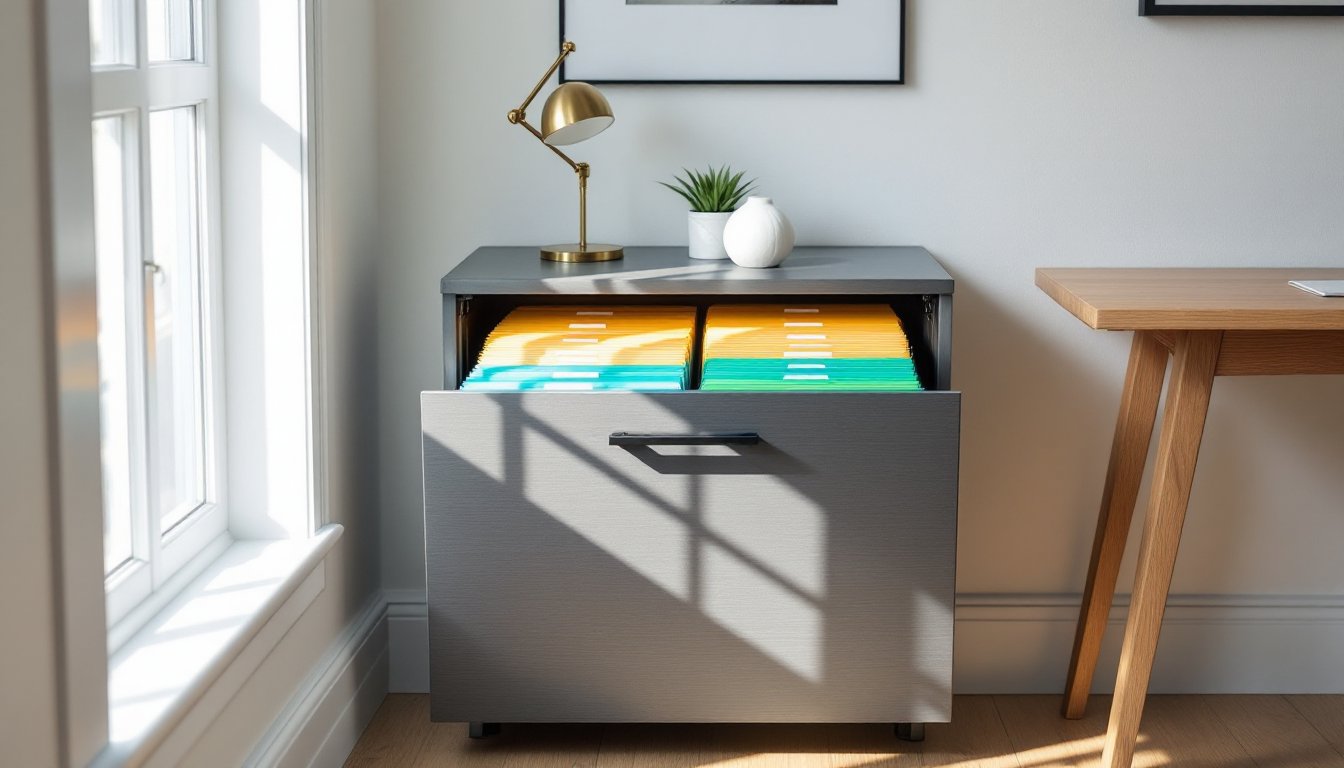
The top surface of a lateral filing cabinet becomes valuable real estate. Use it as a printer stand, lamp table, or display area for plants and picture frames. Just avoid blocking drawer access or creating a cluttered pile zone.
Hardware swaps make a surprising difference. Replacing standard pulls with modern bar pulls, vintage knobs, or leather straps costs $15-40 and takes ten minutes with a screwdriver. Match finishes to other hardware in the room (desk lamps, door handles, curtain rods) for visual cohesion.
For visible placement, consider labeling drawers with brass label holders or printed tabs. It looks intentional instead of chaotic, and anyone who needs a file can find it without playing guessing games.
DIY enthusiasts can find inspiration for custom modifications on platforms like Instructables, where makers share filing cabinet makeovers ranging from simple paint jobs to complete structural redesigns.
Setting Up an Efficient Filing System
Owning a filing cabinet doesn’t automatically create organization, that requires a deliberate system. Start by sorting documents into broad categories: financial, household, legal, medical, insurance, and reference. Within each category, create subcategories (e.g., financial breaks down into taxes, bank statements, investment records, receipts).
Use hanging file folders with built-in plastic tabs rather than manila folders alone. Hanging folders keep everything upright and prevent the collapse that happens when a drawer isn’t full. Manila folders inside hanging folders add an extra layer of organization for thicker files.
Label clearly. Handwritten labels fade and become illegible. Printed labels from a label maker or computer look sharper and last longer. Face all labels the same direction so tabs create a readable index when the drawer opens.
Arrange files alphabetically within categories or by date, depending on what makes sense. Tax documents work best by year (2026, 2025, 2024). Utility bills might go alphabetically (Electric, Gas, Water). Pick one system and stick with it, switching mid-stream creates confusion.
Purge regularly. Most paper documents don’t need permanent storage. Bank statements older than seven years (unless tied to active tax issues) can be shredded. Expired warranties, outdated insurance policies, and obsolete manuals just take up space. Schedule a quarterly or annual purge to keep files current.
Keep a shredder nearby. A cross-cut shredder handles sensitive documents more securely than strip-cut models. If the filing cabinet sits in a home office, the shredder should live within arm’s reach, not in a basement or garage where it won’t get used.
For projects requiring detailed planning and construction, resources like Fix This Build That offer step-by-step guidance that can be printed and filed for future reference.
Safety reminder: Wear gloves when handling old files, paper edges cause surprisingly nasty cuts, and aged documents accumulate dust that irritates lungs. If moving a loaded cabinet, use proper lifting technique (bend knees, not back) or recruit help. A full 4-drawer steel cabinet easily weighs 200+ pounds.