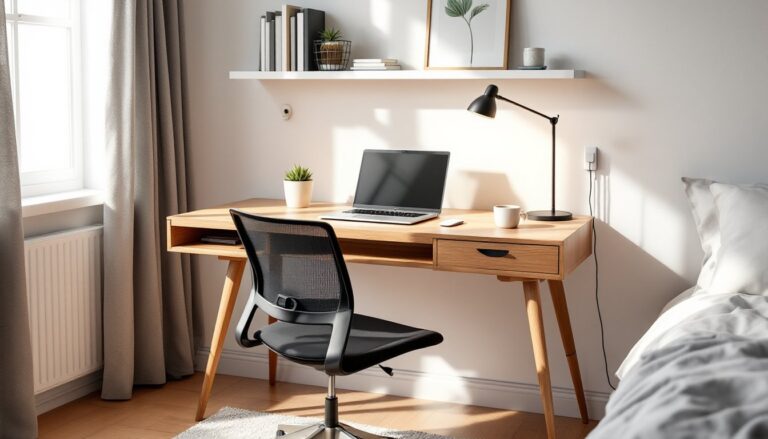
Working from home isn’t going anywhere, but not everyone has a spare bedroom to convert. Whether you’re carving out a nook in the living room or claiming a corner of the bedroom, a tiny home office can be just as functional as a full-size room, if you know how to set it up. This guide walks through proven layout strategies, storage hacks, and design choices that make small workspaces feel larger and work harder.
Table of Contents
ToggleKey Takeaways
- Tiny home office ideas work best when every inch is measured and intentionally planned, using painter’s tape to outline furniture footprints before purchasing to avoid costly mistakes.
- Corner desks and wall-mounted solutions maximize dual-wall space while floating or perpendicular desk placements open up sightlines in compact layouts.
- Vertical storage through floating shelves, pegboards, and tall bookcases keeps supplies accessible and floors clear without sacrificing functionality in small workspaces.
- Multi-functional furniture like Murphy desks, storage ottomans, and rolling carts reduces clutter by serving dual purposes in limited square footage.
- Light colors, strategic lighting with task lamps and uplighting, and mirrors opposite windows create the illusion of more space and reduce the cramped feeling of tiny offices.
- Cable management using trays, wireless peripherals, and labeled cords prevents tangled messes and maintains the clean, focused environment that small offices require for productivity.
Why Tiny Home Offices Are More Popular Than Ever
Real estate is expensive, and spare rooms are rare. Remote and hybrid work models have pushed millions of people to find workspace wherever they can fit it, under stairs, in closets, on landing nooks, and in bedroom corners.
Tiny offices aren’t a compromise. They’re a practical solution that forces intentionality. When space is limited, every inch has to earn its place. That means fewer distractions, smarter furniture choices, and a tighter focus on what actually supports productivity.
According to trends tracked by Apartment Therapy, compact home offices remain one of the most searched design topics in 2026, especially in urban markets. People aren’t waiting for more square footage, they’re building functional setups right now.
Smart Layout Strategies for Compact Home Offices
Layout makes or breaks a tiny office. Start by identifying dead zones: alcoves, hallway ends, unused corners, or the space beside a window that’s too narrow for a couch but perfect for a desk.
Measure everything before buying furniture. A desk that’s 48 inches wide won’t fit in a 46-inch nook, no matter how much you want it to. Use painter’s tape on the floor to outline the footprint of potential desks and chairs. This helps visualize clearance for drawers, chair rollout, and walkways.
Float the desk if wall space is tight. Placing a narrow desk perpendicular to a wall or even in the center of a small room can open up wall space for shelving and keep sightlines clear. Pair this approach with slim-profile task chairs (armless models are easier to tuck under desks) to maintain flow.
Corner Desk Solutions That Don’t Waste Space
Corner desks maximize two walls at once, but not all corner setups are equal. L-shaped desks work well in true 90-degree corners and offer separate zones for a computer and paperwork. Look for models with a 30-inch depth on each leg, anything deeper eats floor space without adding usable surface area.
Triangular corner desks fit tighter angles and odd layouts. They’re compact but often sacrifice workspace. If choosing this style, ensure the front edge is at least 40 inches wide to accommodate a monitor and keyboard without crowding.
Wall-mounted corner desks eliminate legs entirely, creating an open floor feeling and making cleaning easier. Pair with a floating shelf above for a two-tier work corner setup that keeps essentials within arm’s reach. Use heavy-duty brackets rated for at least 100 pounds to support the desktop and any equipment.
Vertical Storage: The Secret to Clutter-Free Tiny Offices
When floor space is scarce, go up. Vertical storage keeps supplies accessible without crowding the desktop or blocking pathways.
Floating shelves installed 12–18 inches above the desk create a second tier for books, binders, and decorative storage boxes. Use adjustable brackets if wall studs don’t align with your preferred spacing, toggle bolts work for drywall, but always anchor into studs when holding heavier items like reference books or equipment.
Pegboards are DIY-friendly and infinitely customizable. Mount a 24×36-inch pegboard above the desk and use hooks, small shelves, and baskets to hold pens, charging cables, sticky notes, and scissors. Pegboard hooks can be rearranged as needs change, unlike fixed shelving.
Tall bookcases with a small footprint (12–15 inches deep) fit beside or behind desks in narrow spaces. Choose units that reach at least 72 inches high to maximize capacity. Store daily-use items at eye level and archive or seasonal materials up top.
Magnetic strips mounted on walls or the side of a file cabinet hold small metal tools, paper clips, and scissors. Over-the-door organizers work for closet offices, keeping supplies visible and off the floor. Many office storage solutions use vertical real estate that would otherwise go to waste.
Multi-Functional Furniture for Maximum Efficiency
In a tiny office, every piece should do more than one job. Multi-functional furniture reduces clutter and makes the most of limited square footage.
Murphy desks fold flat against the wall when not in use, disappearing entirely in shared spaces like living rooms or bedrooms. Many models include built-in shelving or corkboard on the interior panel. Installation requires locating wall studs and using lag bolts rated for the unit’s weight, typically 50–75 pounds when loaded.
Storage ottomans double as seating for video calls or guest chairs and hide office supplies, cables, or paperwork inside. Choose firm, flat-topped models that won’t compress under laptop use.
Desks with built-in drawers or shelves eliminate the need for separate filing cabinets. Look for units with at least two drawers: one for hanging file folders (legal or letter size) and one shallow drawer for pens and small items. Some small desks for home office setups include pull-out keyboard trays to reclaim surface space.
Rolling carts on casters can serve as printer stands, supply organizers, or mobile side tables. Choose models with locking wheels to prevent drift. Metal utility carts hold heavier equipment like printers or laminators: wood or plastic carts work for lightweight supplies.
Folding chairs store flat when guests aren’t around. Opt for padded folding models if they’ll be used regularly, cheap metal frames get uncomfortable fast.
Lighting and Color Tricks to Make Small Offices Feel Bigger
Lighting and color affect how spacious a tiny office feels. Poor choices make the room feel cramped: smart ones open it up.
Natural light is ideal but not always available. If the office has a window, keep treatments minimal, sheer curtains or top-down shades let light in while maintaining privacy. Avoid heavy drapes that block daylight and make the space feel closed-in.
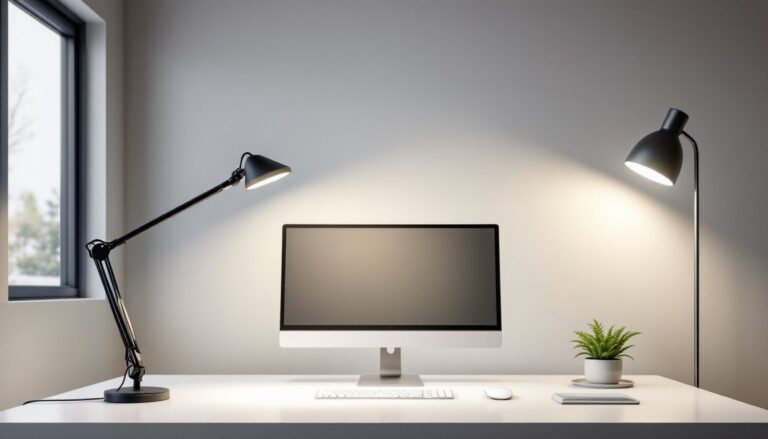
Task lighting matters more than overhead fixtures in small offices. A swing-arm desk lamp with LED bulbs provides focused light without taking up desktop real estate. Look for lamps with adjustable color temperature (3000K–5000K range) to match the time of day and task.
Uplighting bounces light off the ceiling, making the room feel taller. Place a floor lamp with an upward-facing shade in a corner to add ambient light without glare on screens.
Paint choices influence perception of space. Light, cool colors, soft grays, pale blues, or whites, reflect more light and make walls recede visually. Darker colors can work as accent walls but should be limited to one surface to avoid closing in the room. For more on selecting hues that support focus and mood, explore paint colors for home office setups.
Mirrors placed opposite windows amplify natural light and create the illusion of depth. A 24×36-inch mirror is large enough to make an impact without overwhelming a small wall. Avoid placing mirrors directly behind monitors, glare becomes an issue fast.
Tech and Cable Management in Tight Quarters
Cables and chargers multiply fast in home offices, and in tight spaces, tangled cords quickly become a tripping hazard and visual mess.
Cable trays mount under desks and corral power strips, adapters, and excess cable length. Metal mesh trays are affordable and easy to install with included screws or adhesive clips. Route cables through the tray and secure with velcro straps instead of zip ties, velcro allows adjustments without cutting.
Cord clips stick to desk edges or walls and hold individual cables in place. Use them to guide charging cables, USB lines, or headphone cords along defined paths. Adhesive-backed clips work on most surfaces but may damage paint when removed, use Command strips for rental-friendly options.
Wireless peripherals reduce cable clutter. Bluetooth keyboards, mice, and headphones eliminate several cords at once. Trade-off: they require charging, so plan for a charging station or rotation.
Power strips with USB ports consolidate charging and reduce the number of wall adapters. Mount the strip to the underside of the desk or inside a drawer to keep it accessible but out of sight. Choose models with surge protection rated for at least 1000 joules, home offices often run computers, monitors, and routers simultaneously.
Label cables with tape, tags, or heat-shrink labels. When troubleshooting or rearranging, knowing which cable powers what saves time and frustration. Creative IKEA Hackers projects show clever ways to hide routers and power bricks inside hollow furniture or repurposed boxes.
Keep tech efficient and organized to maintain a clean workspace. Managing cables upfront prevents the need for a major detangling session later. According to Real Simple, decluttered workspaces improve focus and reduce stress, both critical in a tiny office where distractions are harder to escape.